
Artisan Ink
September 10, 2026
There is usually one question behind every cover-up enquiry:
Can you cover this?
Sometimes the answer is straightforward. Sometimes it needs a little more thought. And occasionally the best answer isn't to cover the tattoo immediately at all.
A good cover-up isn't simply a case of putting a darker tattoo over an old one and hoping it disappears. The existing tattoo becomes part of the design problem. Its size, position, shape, colour, saturation and age all influence what can be created over it.
That doesn't mean you have to settle for something you don't really want.
It means the starting point is different.
If you're considering a cover-up tattoo in Chiang Mai, the most useful thing you can do first is understand what a cover-up can realistically achieve — and why the right artist will want to see the existing tattoo before suggesting the solution.
What is a tattoo cover-up?
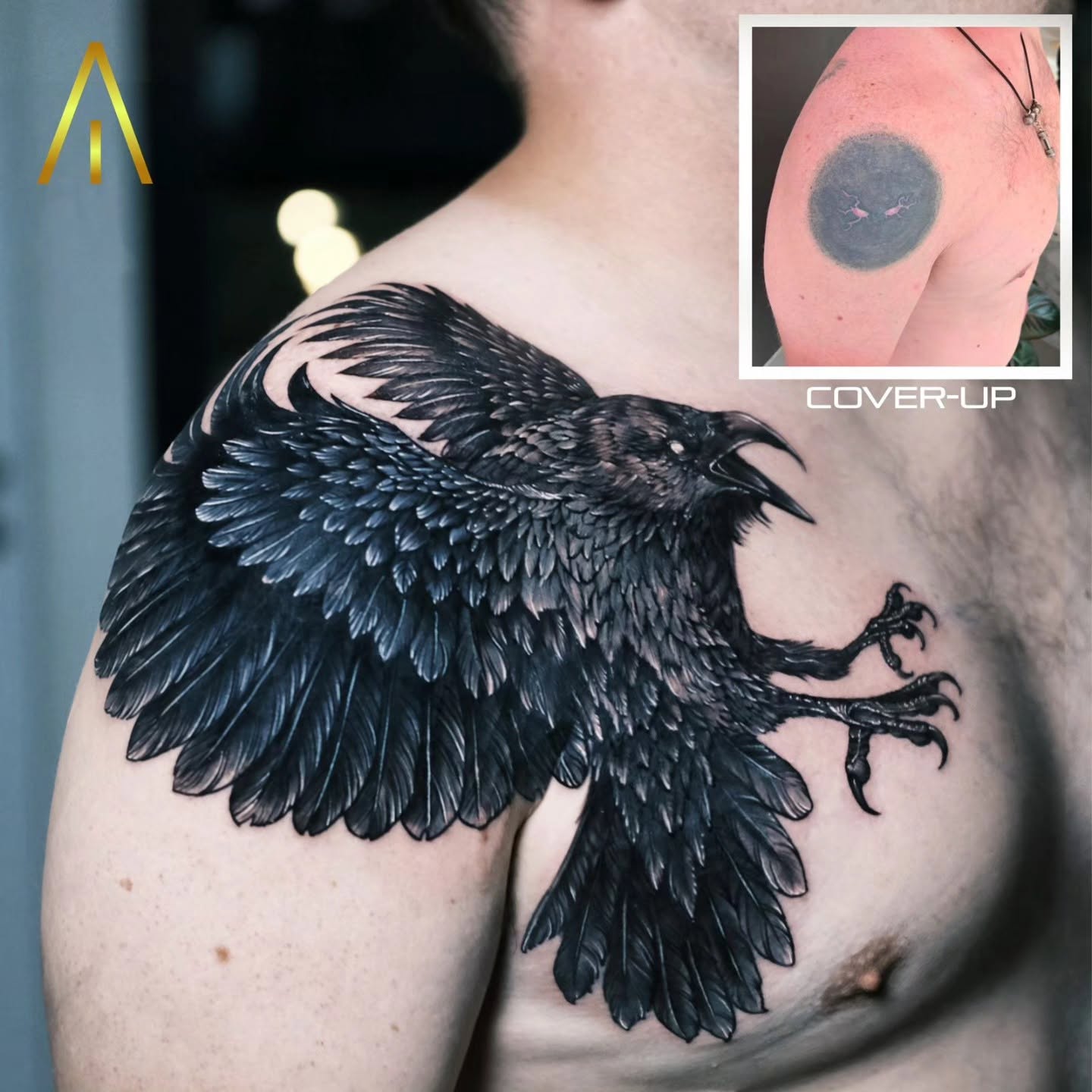
A tattoo cover-up is a new tattoo designed and applied over an existing tattoo so that the original is no longer the dominant image.
The important word there is designed.
Old ink doesn't vanish when new ink is placed over it. Tattoo pigment remains within the skin, so the artist has to create a new composition that accounts for what is already there.
Dark areas of the existing tattoo may become shadows, texture or deeper areas within the new piece. Existing shapes can sometimes be absorbed into larger forms. The focal point of the new tattoo may be deliberately moved away from the strongest parts of the original.
Done properly, your eye reads the new tattoo, rather than searching for the old one underneath.
That's why cover-up work requires a different kind of planning from tattooing untouched skin.
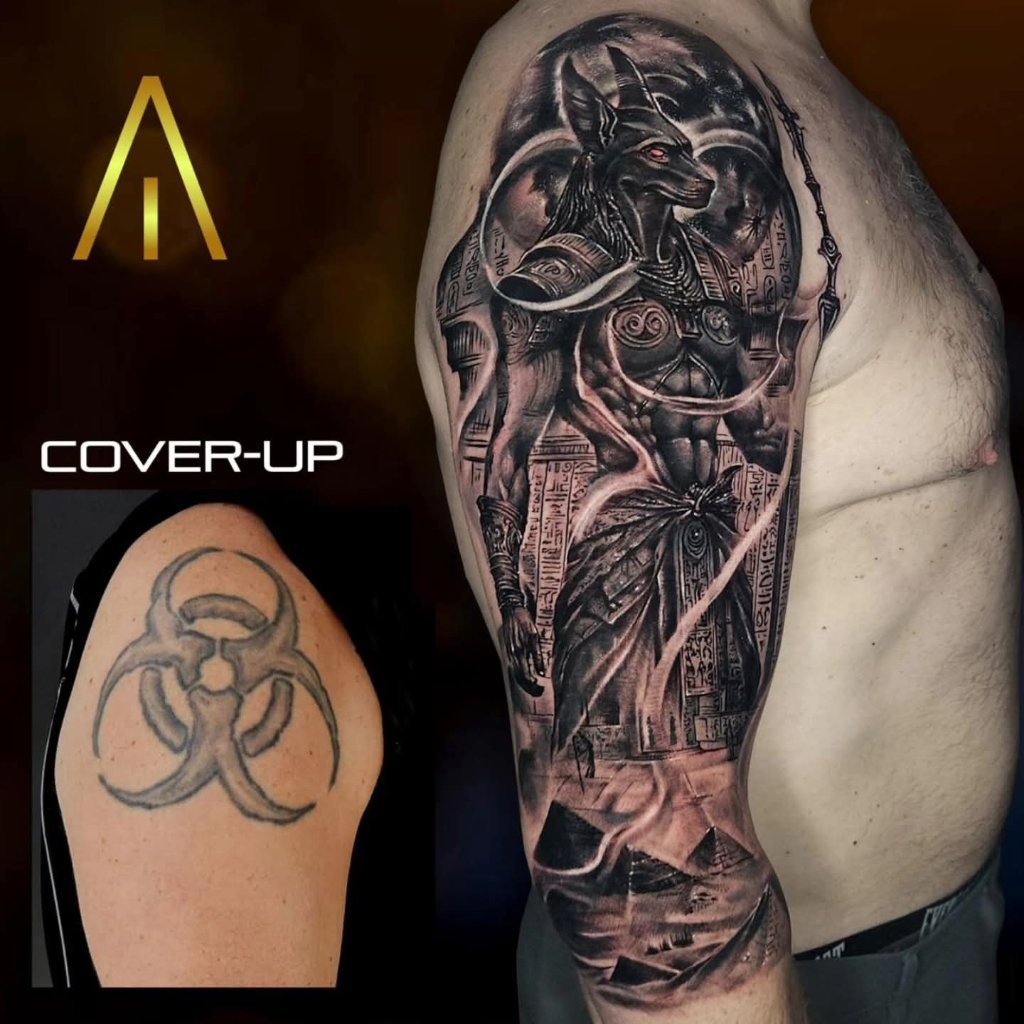
Can any tattoo be covered?
Many tattoos can be covered or significantly transformed, but not every tattoo can be successfully covered with every design.
This is probably the most important thing to understand before choosing what you want next.
A small, faded tattoo with relatively light pigment gives an artist considerably more freedom than a large piece containing heavily saturated black.
Several things affect what is possible.
How dark is the existing tattoo?
Dark, densely packed pigment is more restrictive than light or faded work.
Black ink in particular cannot simply be made invisible by putting a lighter colour over it.
That doesn't automatically make a dark tattoo impossible to cover. It means the new design needs to be planned around those darker areas rather than pretending they aren't there.
How old is the tattoo?
Older tattoos are often easier to work with because pigment may have softened and faded over time.
A faded tattoo generally gives the artist more options than a fresh, highly saturated one.
Age alone isn't enough to determine whether something will cover well, though. Some older tattoos remain extremely dark while relatively recent tattoos may already have faded considerably.
The tattoo itself needs to be assessed.
How large is it?
Size matters for two reasons.
First, the new design needs enough coverage to deal with the existing image.
Second, the artist needs space around the old tattoo to create something new.
That additional space is often where much of the visual trickery happens.
It allows the artist to move focal points, introduce contrast and create a composition that draws attention away from the old tattoo.
What colours are already there?
Existing colour affects the palette available for the new tattoo.
A pale, faded colour tattoo is very different from an area packed with strong black, blue, red or green.
Rather than following a simplistic rule about which colour "covers" another, an experienced cover-up artist looks at the saturation and value of the existing pigment and designs accordingly.
What condition is the skin in?
The artist also needs to look at the skin itself.
Scarring, raised areas, previous tattooing and previous laser treatment can all affect the approach.
This is another reason a photograph can be useful for an initial conversation, but a proper assessment is sometimes necessary before making final decisions.
Does a cover-up tattoo have to be bigger?
Usually, yes — at least to some degree. But there isn't a universal formula.
You may come across rules online saying that a cover-up must be twice the size of the original tattoo, or some other fixed ratio.
Tattooing doesn't work quite that neatly.
The amount of additional space required depends on what is being covered and what you want to replace it with.
A little extra space gives the artist somewhere to take the new composition. Instead of squeezing an entirely new image inside exactly the same boundary as the old tattoo, the artist can create new shapes and focal points around it.
Sometimes that requires a relatively modest increase.
Sometimes the best solution is considerably larger.
What matters isn't reaching a predetermined ratio. It is giving the new tattoo enough room to look like a deliberate piece of artwork rather than an obvious cover-up.
Does a cover-up have to be darker?
This is another question where the answer is more nuanced than a simple yes or no.
The areas directly covering dark existing pigment will usually need enough depth, texture or saturation to control what shows through.
But that does not mean the entire new tattoo has to become one large dark mass.
In a well-planned cover-up, lighter areas, open skin and contrast can sometimes be used elsewhere in the composition to balance the darker areas required over the original tattoo.
The objective isn't:
Make everything darker.
It's:
Use darkness where it has a job to do.
That distinction can make the difference between a cover-up that merely hides something and a new tattoo that works beautifully in its own right.
Can you cover a black tattoo?
Black tattoos can be covered, but dense black is one of the more challenging starting points.
If the existing tattoo contains relatively light black linework or has faded substantially, there may be considerable flexibility.
Solid black areas are different.
New tattoo pigment cannot simply erase the black underneath. The artist may need to incorporate those areas into the darkest portions of the new composition, substantially change the scale of the tattoo, or discuss fading the original first.
The important thing is not to promise the impossible.
If keeping the new tattoo relatively light is important to you, reducing some of the existing pigment before tattooing may give the artist far more freedom.
Do I need laser removal before a cover-up?
Not necessarily.
Many tattoos can be covered without laser treatment.
But there is an important middle ground between keeping a tattoo exactly as it is and having it completely removed.
That middle ground is laser fading.
The purpose isn't necessarily to make the old tattoo disappear.
It is to reduce enough of the existing pigment to give the tattoo artist more freedom when designing the new piece.
This can be particularly useful when the old tattoo is very dark, heavily saturated or contains strong shapes that would otherwise dictate too much of the new design.
Think of it as creating more room to work.
The lighter the old tattoo becomes, the fewer compromises may be necessary in the new one.
Whether laser fading is worthwhile — and how much fading would be useful — depends on the individual tattoo and the intended cover-up.
What tattoo styles work best for cover-ups?
There isn't one universally "best" cover-up style.
What works depends on the tattoo underneath.
Styles that naturally contain areas of depth, texture, movement and contrast can provide an artist with useful tools.
For example, depending on the original tattoo, possibilities might include:
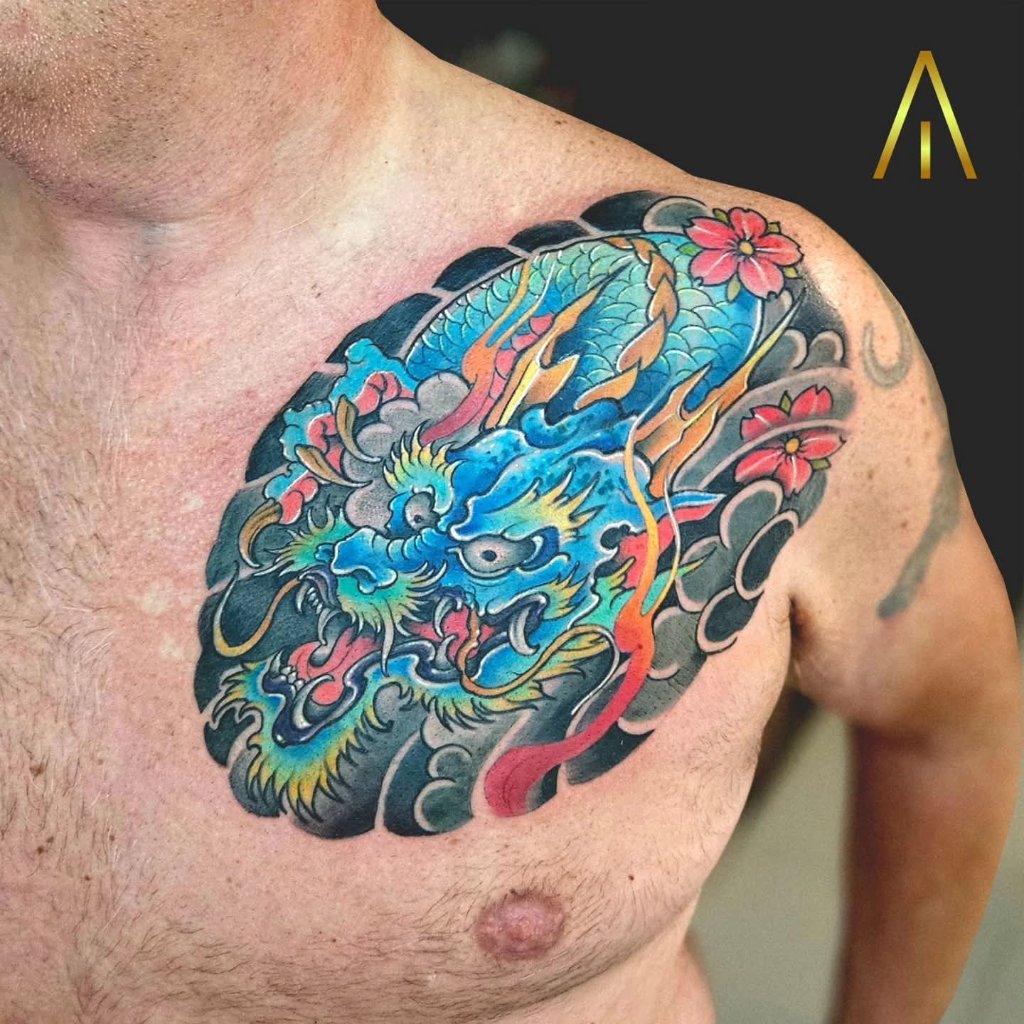
- Japanese tattooing, where larger compositions, movement, backgrounds and areas of strong saturation can offer considerable design flexibility.
- Blackwork, where bold shapes and deliberate use of black may make it possible to incorporate darker existing work.
- Realism, where texture, shadows and tonal variation can sometimes be used strategically within a larger composition.
- Illustrative, ornamental or organic designs, where leaves, flowers, animals, pattern and flowing forms can provide opportunities to redirect shapes and create new visual structure.
But choosing a style simply because somebody online says it's "good for cover-ups" is backwards.
The question should be:
What can we create that works with this particular tattoo?
Can a fine-line tattoo cover an old tattoo?
Sometimes — but it is far more dependent on what is underneath.
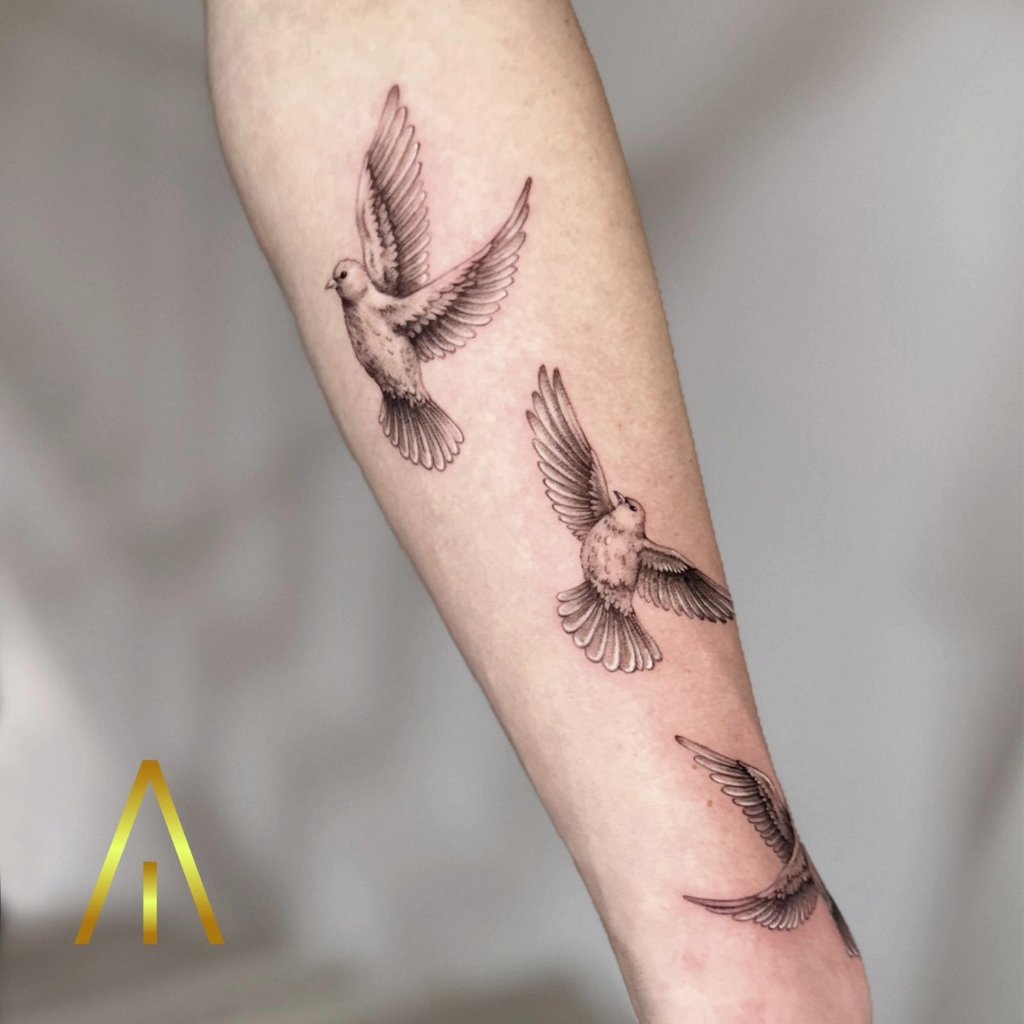
Fine-line tattooing relies on delicacy, precision and relatively subtle visual information. That gives an artist fewer tools for disguising a dark, heavily saturated tattoo.
If the existing tattoo is extremely light, small or significantly faded, fine-line elements may sometimes form part of the solution.
Trying to cover substantial dark pigment with a delicate fine-line design, however, creates an obvious problem: there simply isn't enough visual weight in the new tattoo to control what is underneath.
If a lighter or more delicate final tattoo is important to you, this may be one of the situations where laser fading first opens up better design options.
Cover-up or rework: what's the difference?
Not every tattoo somebody dislikes needs to disappear.
Sometimes the better solution is a rework.
A cover-up is intended to conceal or substantially replace the visual identity of the existing tattoo.
A rework keeps some or all of the original tattoo and improves it.
That might mean strengthening faded areas, improving contrast, correcting elements that haven't aged well, adding detail, extending the composition or incorporating the old tattoo into a larger piece.
There is also a creative middle ground.
Sometimes part of an existing tattoo is worth keeping while another part is redesigned or covered.
That's why walking into a consultation saying "I hate this; cover it" doesn't necessarily mean the artist's first job is to make every millimetre disappear.
First, it's worth working out exactly what isn't working for you.
The best solution may be more interesting than simply replacing one image with another.
Will you still be able to see the old tattoo underneath?
A successful cover-up is designed so that the original tattoo no longer reads as the dominant image.
But it is important to have realistic expectations.
Skin isn't an opaque sheet of paper, and tattoo pigment isn't correction fluid.
Particularly with very dark or saturated tattoos, traces of previous pigment can sometimes influence the finished result. How visible that is depends on the original tattoo, the new design and how everything heals.
This is one reason healed cover-up work is particularly useful when looking at an artist's portfolio.
Fresh tattoos naturally appear stronger and more saturated. The real test is how the cover-up settles once healed.
Why does the design matter so much?
With a tattoo on untouched skin, the artist begins with relatively few visual restrictions.
With a cover-up, part of the composition already exists.
Imagine drawing a picture on a blank sheet of paper compared with being handed a sheet containing several permanent dark shapes and being asked to create something completely different.
You could simply colour the entire page black.
Technically, you have covered them.
Artistically, you've solved very little.
The interesting challenge is creating a new image so effective that those original marks stop being important.
Tattoo cover-ups work on a similar principle.
An artist can use shape, scale, texture, contrast, direction and focal points to change what the eye notices first.
This is why some of the best cover-ups don't immediately look like cover-ups.
They simply look like tattoos.
Can I choose any design I want for a cover-up?
You should absolutely have a say in what goes on your body.
But a cover-up does require flexibility.
If you arrive with an exact small design and insist that its size, position, colour and every detail remain unchanged, the artist may simply not have enough freedom to successfully cover what's underneath.
That's not the artist being difficult.
It's the old tattoo having a vote in the new design.
A better approach is to begin with what you like.
Bring subjects, styles, imagery and references that appeal to you. Explain what you want the finished tattoo to feel like and what you definitely don't want.
Then allow the artist to explore how those ideas can work with the existing tattoo.
The strongest cover-ups usually happen when there is enough trust on both sides for the design to evolve.
Why is the consultation so important?
Every tattoo benefits from a good conversation before it begins.
For a cover-up, that conversation is essential.
An artist needs to understand two things:
What is already there?
and
Where do you want to go from here?
During a cover-up consultation, expect the artist to look at the existing tattoo's size, shape, placement, colour, saturation and condition.
They should also want to know what you dislike about it.
That last part matters.
Maybe you don't hate the whole tattoo. Maybe you dislike the style. Perhaps it reminds you of a period of your life you've moved beyond. Maybe the execution was poor. Or perhaps you simply wouldn't choose the same thing today.
Understanding the problem helps determine the right solution.
And a good consultation should occasionally contain a word people don't always expect from a tattoo artist:
No.
No, that design won't adequately cover it.
No, keeping it that small won't give the result you're asking for.
No, tattooing over it immediately isn't the best option.
An artist who tells you the limitations before taking your money is doing their job.
How do I choose a cover-up tattoo artist in Chiang Mai?
If you're looking for a cover-up tattoo artist in Chiang Mai, don't choose purely on the basis of who can fit you in tomorrow.
Look at the artist's actual work.
Ideally, look for examples of cover-ups and, where possible, healed results.
Pay attention to whether the finished tattoo looks naturally composed or whether you can immediately identify the dark patch where the old tattoo used to be.
You also want an artist who asks questions before offering solutions.
If somebody promises to cover a large, dark tattoo with a tiny pale design without properly assessing it, enthusiasm isn't necessarily expertise.
A strong cover-up artist should be comfortable telling you what is possible, what isn't, and what would improve the result.
Getting a cover-up tattoo while visiting Chiang Mai
If you're travelling to Chiang Mai and considering a cover-up while you're here, allow enough time for the process.
Cover-ups often require more planning than choosing a small tattoo from a reference image.
Sending clear photographs before arriving can help begin the conversation, particularly if your time in Chiang Mai is limited.
Photograph the tattoo in natural light if possible, with the entire area visible rather than only a close-up. Including a wider image showing where the tattoo sits on the body can also help the artist understand the available space around it.
If laser fading is likely to be beneficial, discovering that before the final day of your holiday is considerably more useful than discovering it in the tattoo chair.
And remember that the tattoo still needs to heal.
Thailand's heat, strong sun, swimming pools, sea and holiday activities all need to be considered when deciding when during your trip to get tattooed.
What should I send an artist before a cover-up consultation?
For an initial assessment, it helps to provide:
- Clear photographs of the existing tattoo in good natural light
- A wider photograph showing its position on the body
- Approximate dimensions
- Information about its age and whether it has previously been reworked or lasered
- Images showing tattoo styles or subjects you genuinely like
- An explanation of what you want to change
- Any areas or elements of the existing tattoo you would be happy to keep
You don't need to design the solution yourself.
That's part of what you're going to the artist for.
Frequently asked questions about tattoo cover-ups
Can a tattoo be completely covered?
Many tattoos can be effectively covered so the original design is no longer visually apparent, but the result depends on the existing tattoo's darkness, size, saturation, placement and the design chosen to replace it. Very dark or heavily saturated work may benefit from laser fading first.
Can you put skin-coloured ink over a tattoo to hide it?
Skin-coloured pigment does not work like paint applied over a wall. Tattoo pigments sit within the skin and interact visually with pigment already present. Simply tattooing a skin-tone colour over dark ink will not reliably erase the tattoo.
Can white ink cover a black tattoo?
White ink should not be thought of as an eraser for existing black pigment. There are specialist techniques involving tattooing over dark or black areas, but that is different from simply applying white ink and expecting the black tattoo underneath to disappear.
Can you cover a tattoo without laser removal?
Yes. Many cover-ups can be completed without laser treatment. Laser fading becomes useful when reducing existing pigment would materially improve the design options or finished result.
How long should I wait before covering a new tattoo?
The existing tattoo needs to be fully healed and settled before further tattooing is considered. The appropriate timing depends on the tattoo, skin and healing process, so this should be assessed rather than relying on a universal number of weeks.
Are old tattoos easier to cover?
Often, but not automatically. Older tattoos may have faded, which can make them easier to work with. Some older tattoos remain heavily saturated, so the current condition matters more than age alone.
Can a name or lettering tattoo be covered?
Often, yes. The difficulty depends on the size, darkness, placement and style of the lettering. Dense black lettering may require a stronger or larger composition than light, faded script.
How much does a cover-up tattoo cost in Chiang Mai?
There isn't a meaningful single price for cover-up work because the amount of design and tattooing required varies enormously. Size, complexity, artist, placement, number of sessions and whether the existing tattoo requires preparatory fading can all affect the total cost. A consultation allows the artist to assess the actual tattoo before estimating the work involved.
A cover-up should be something you would choose anyway
Perhaps this is the most important point.
The goal of a cover-up shouldn't be to replace a tattoo you don't want with another tattoo you only chose because it could hide the first one.
You're going to live with the new piece too.
Sometimes achieving the tattoo you really want requires making it larger. Sometimes it means changing the composition. Sometimes it means keeping part of what is already there. And sometimes the best decision is to fade the existing tattoo before doing anything else.
Those aren't compromises for the sake of making the artist's job easier.
They're options for giving the new tattoo the best chance of becoming something that looks intentional, belongs on your body and still works years from now.
At Artisan Ink Tattoo in Chiang Mai, a cover-up starts with the same thing every considered tattoo should start with:
a conversation.
Show us what you have.
Tell us what you'd rather have instead.
Then we can work out what's actually possible.
Thinking about a cover-up?
Send us your tattoo and start the conversation →