Artisan Ink
July 30, 2026
Realism tattoos stop people in their tracks. There's something about seeing a photograph rendered in ink on skin that makes you lean in and look closer. A well-executed realism tattoo doesn't just look like a tattoo, it looks like a moment frozen in time, a face, an animal, a scene that could have been pulled straight from a frame.
That's the appeal, and it's why realism has become one of the most requested tattoo styles in studios around the world, including ours in Chiang Mai. But the same qualities that make realism tattoos so striking also make them demanding. They require a specific kind of artist, a specific kind of commitment, and honestly, they're not the right choice for everyone.
This guide is here to help you figure out whether a realism tattoo is right for you. Not to talk you into one, but to give you the honest information you need to make a decision you'll still be happy with in ten years.
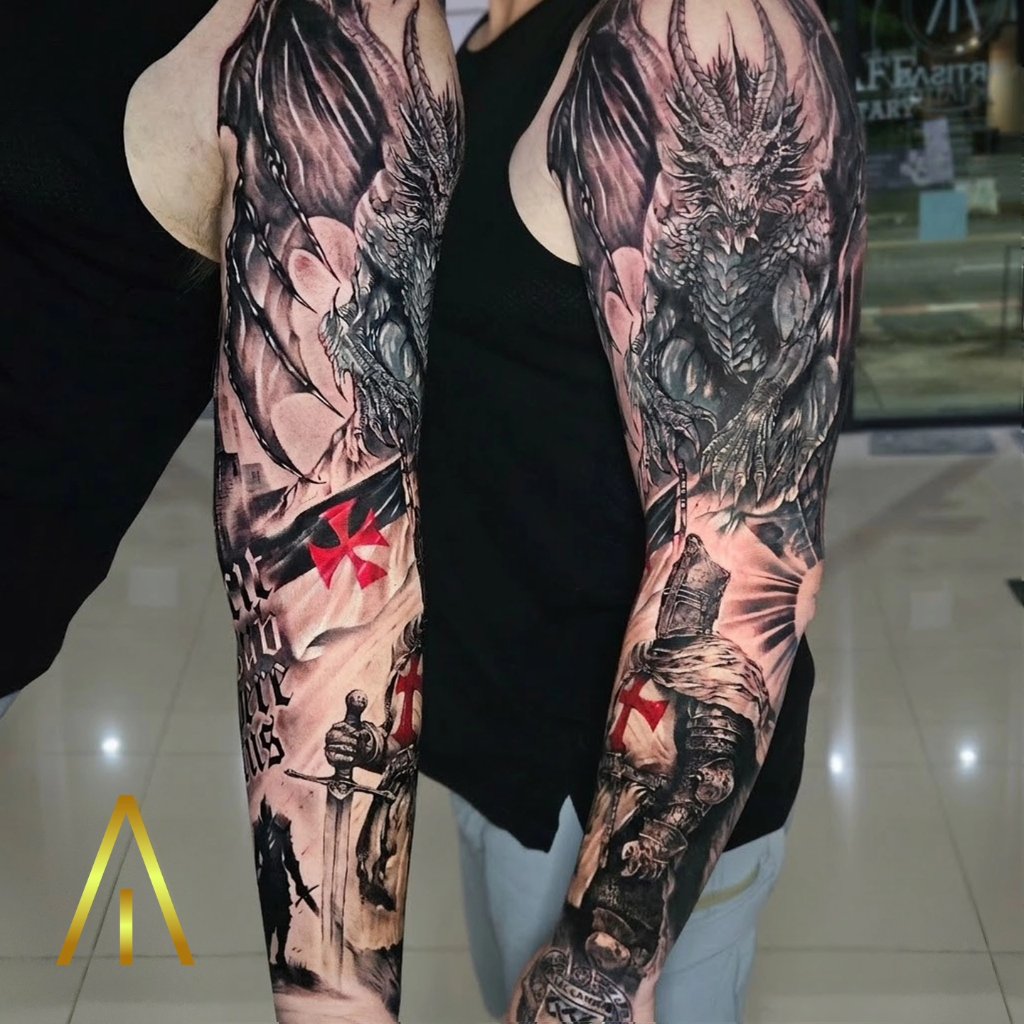
What Is a Realism Tattoo?
A realism tattoo is any tattoo designed to look like a real photograph or real-life image rather than a stylised or symbolic interpretation. The goal is to replicate the subject as accurately as possible on skin, using shading, contrast, and fine detail to create the illusion of depth and dimension.
Within realism, there are several distinct approaches:
Photorealism tattoos aim to replicate a photograph as closely as the medium allows. Every wrinkle, every highlight, every shadow is reproduced. This is the most technically demanding form of realism and the one most likely to make people do a double take.
Black and grey realism uses only black ink diluted to different shades to build the image. This is the most common form of realism tattooing, partly because black ink holds its shape over time better than colour, and partly because the absence of colour lets the shading do all the work. Portrait tattoos, religious figures, and memorial pieces are most often done in black and grey.
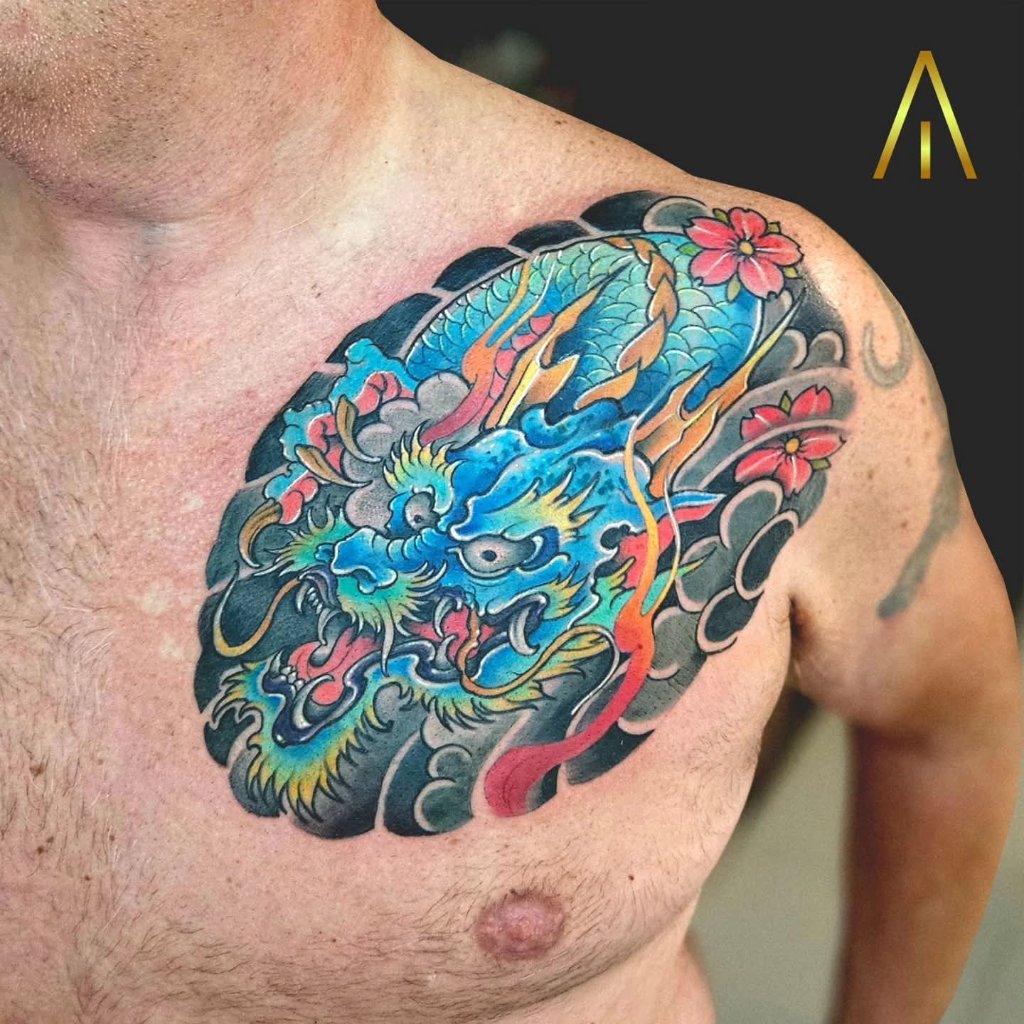
Colour realism uses full colour to replicate the subject. Think of a brightly coloured flower, a tropical bird, or a movie character rendered in their actual colours. Colour realism is striking but comes with its own set of challenges around longevity and maintenance, which we'll get to.
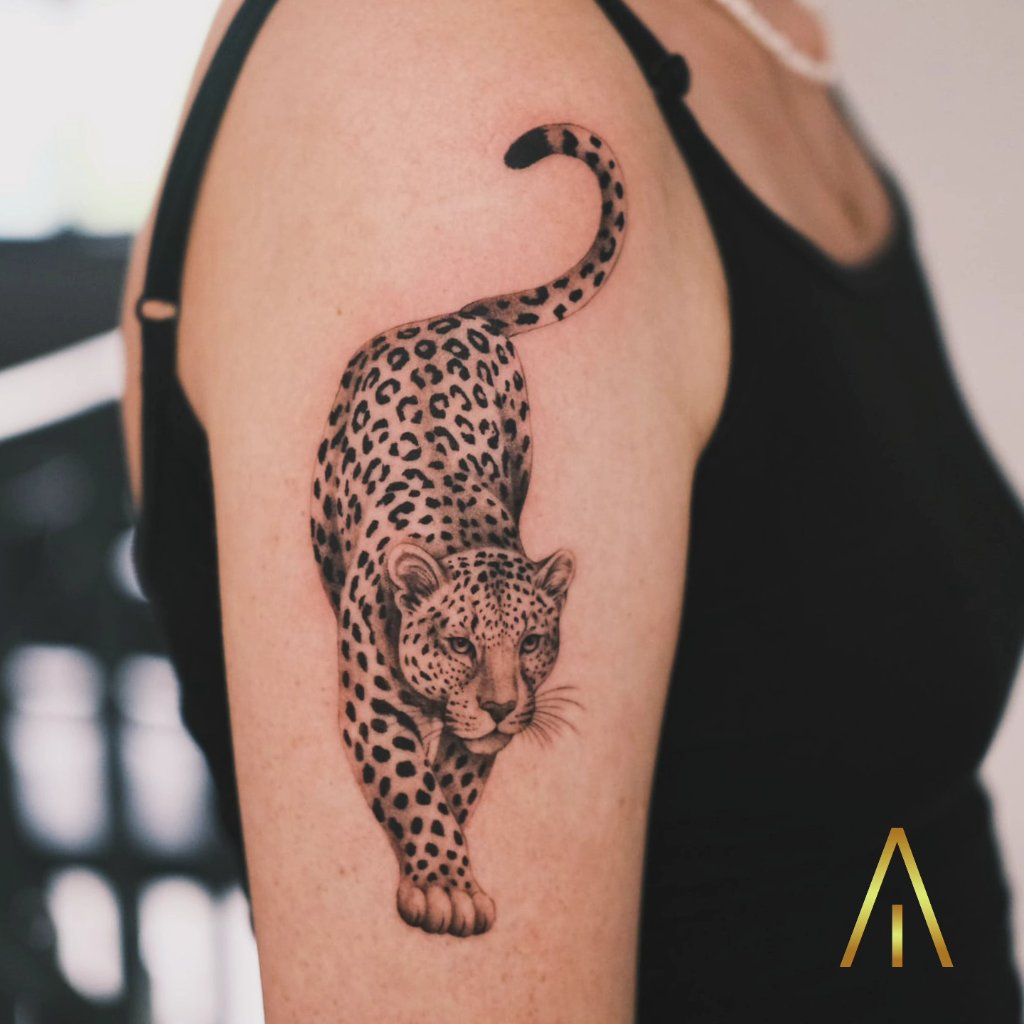
The subjects themselves vary widely. Portraits of loved ones, celebrities, or pets are among the most common. Animal realism covers everything from a beloved dog to a wild tiger. Nature realism includes flowers, landscapes, and botanical studies. Object realism might be a watch, a camera, a vintage car. And film and pop culture realism reproduces iconic scenes or characters from movies, music, and art.
What sets realism apart from traditional or illustrative tattoo styles is the intent. A traditional rose tattoo is designed to read clearly and boldly, with thick outlines and limited shading. A realistic rose is designed to look like an actual rose, with soft transitions, subtle shadows, and no bold outline at all. The traditional rose is built to last in any conditions. The realistic rose is built to look like life, and that comes with trade-offs.
Why Realism Is One of the Hardest Tattoo Styles
If you've ever wondered why realism tattoos cost more or why fewer artists specialise in them, it comes down to this: realism leaves no room to hide.
A traditional tattoo can absorb a wobbly line because the boldness of the style carries it. A fine line tattoo can be delicate because that's the point. But a realism tattoo lives or dies on the accuracy of its shading, and shading is the hardest thing to get right in tattooing.
Light and shadow are the entire foundation. A realism artist has to understand how light falls on a three-dimensional subject and reproduce that on a flat, curved, moving surface. Get the shadows wrong and the face looks flat. Get the highlights wrong and the depth disappears.
Contrast is what makes the image readable. Without enough dark and light range, a realism tattoo turns into a muddy grey smudge over time. Building strong contrast without making the image look harsh is a skill that takes years.
Texture is what makes skin look like skin, fur look like fur, and metal look like metal. A realism artist uses different needle groupings and techniques to create these textures, and the difference between a smooth cheek and a rough beard is all in the application.
Depth is the illusion that makes a flat tattoo look three-dimensional. It's built through careful layering of dark and light, and it's the first thing to disappear if the shading isn't right.
Smooth shading is the technique that separates good realism from bad. The transitions between dark and light need to be seamless. Any visible banding or harsh line in the shading is immediately noticeable in a realism piece.
Tiny details matter more in realism than in any other style. The catch-light in an eye, the texture of a nostril, the individual strands of hair. These are the elements that make a portrait look alive, and they require a steady hand and a deep understanding of the subject.
Precision is non-negotiable. In a portrait, if the eyes are slightly off, the whole face looks wrong. The spacing, the angle, the proportion, all of it has to be accurate to a fraction of a millimetre.
This is why artist choice matters so much in realism. An artist who excels at traditional or fine line work may not have the specific skill set that realism demands. It's a different discipline, and it's worth seeking out someone who has made it their focus.
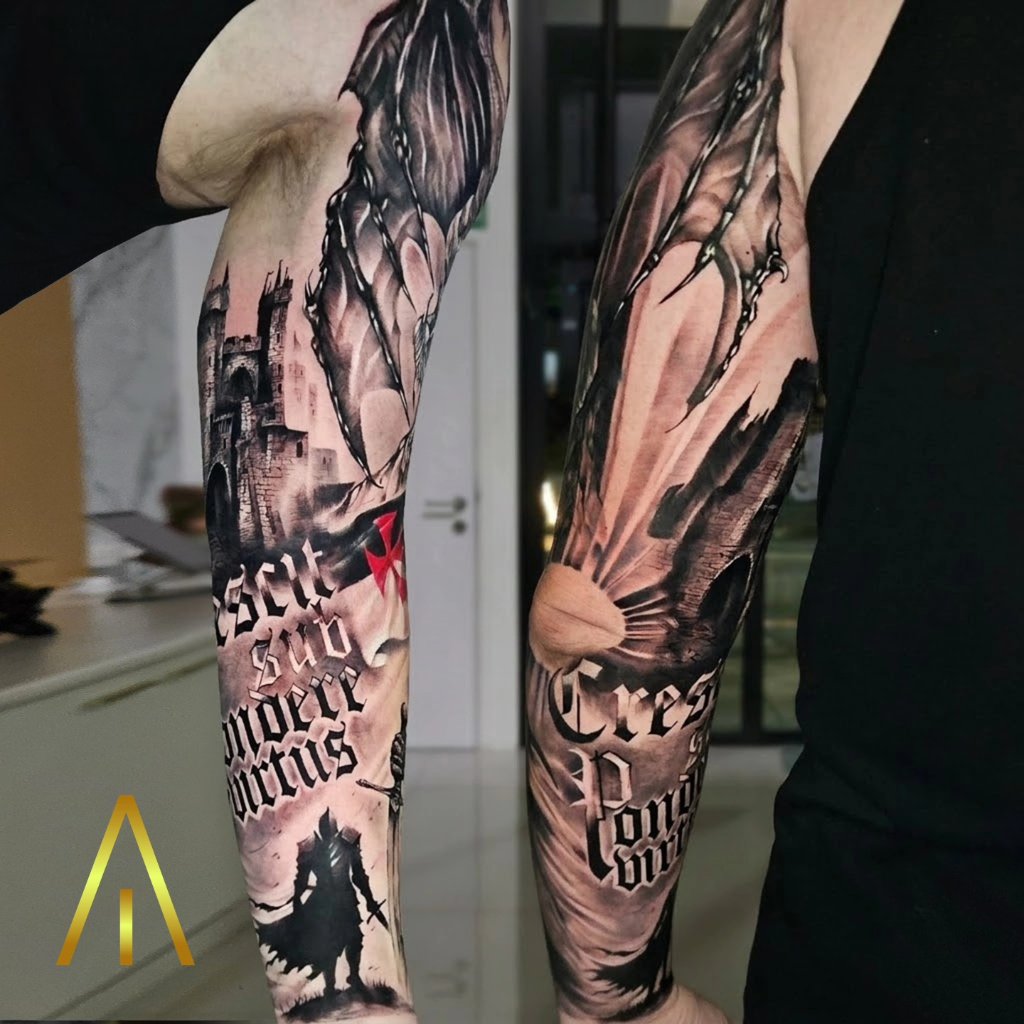
Black & Grey vs Colour Realism
Most realism tattoos fall into one of two camps, and the choice between them affects more than just the look.
Appearance is the obvious difference. Black and grey realism has a timeless, almost photographic quality. It reads like a black and white film still. Colour realism is vibrant and immediate, closer to a high-definition photograph. Both can be stunning, but they create very different moods.
Longevity favours black and grey. Black ink is the most stable pigment used in tattooing. It holds its density longer than any colour, which means a black and grey realism piece will keep its contrast and readability for longer. Colour realism, particularly lighter colours like yellow and white, fades faster under UV exposure and may need refreshing sooner.
Maintenance is simpler for black and grey. There's no colour to keep vibrant, so the main concern is sun protection and moisturising. Colour realism benefits from more diligent sunscreen use and occasional touch-ups to keep the colours true.
Healing is similar for both, but colour realism can be slightly more demanding. More pigment goes into the skin, which can mean a longer, more tender healing period. Large colour pieces may weep more and peel more heavily.
Skin tone suitability is worth discussing honestly. Black and grey realism works well on most skin tones because the contrast is built from black ink, which reads clearly on light and darker skin alike. Colour realism can be more challenging on very dark skin, where lighter colours may not show up as intended. A good realism artist will talk to you about what will actually work on your skin, not just what you saw on Instagram.
Cost tends to be higher for colour realism because of the time and materials involved. More ink, more passes, more session time. Black and grey is generally more affordable for the same size piece, though both are priced according to the artist's skill and time.
Which suits different personalities is a personal question. If you want something that feels timeless and will age predictably, black and grey is the safer bet. If you want something that pops and you're willing to maintain it, colour realism can be extraordinary. Some people collect both and let the subject dictate the approach.
Do Realism Tattoos Age Well?
This is the question people ask most often, and the honest answer is: they age well if they're done well, but they don't age the same way bold traditional tattoos do.
All tattoos soften over time. Ink slowly spreads under the skin, and fine details blur together. This is a natural process and it happens to every tattoo, regardless of style. The question is how much the style can afford to soften before it stops looking good.
Realism relies on fine detail and subtle shading, which means it has less room to soften before the image starts to lose its impact. A portrait that's razor-sharp at six months will be slightly softer at five years and noticeably softer at ten. That doesn't mean it looks bad, but it does mean the crispness fades.
Contrast is the single most important factor in how a realism tattoo ages. An artist who builds strong dark and light values gives the tattoo a buffer. As the ink spreads and softens, there's still enough range for the image to read clearly. An artist who works too soft, afraid of going dark, produces a tattoo that turns to grey mush within a few years.
Placement matters a lot. Areas that don't get much sun and don't flex constantly age better. The outer upper arm, the thigh, and the back are all good choices for realism. The fingers, inner wrist, and feet are poor choices because the skin there moves and rubs and fades the ink quickly.
Sun exposure is the biggest enemy of any tattoo, but it's especially damaging to realism. UV light breaks down the ink and accelerates the softening. If you want your realism tattoo to look good for as long as possible, daily sunscreen is not optional. It's the single most effective thing you can do.
Aftercare during the initial healing period sets the foundation. A well-healed tattoo holds its detail better than one that was neglected or abused during healing. Our aftercare guide covers this in detail.
Touch-ups are a normal part of realism tattoo ownership. Most realism artists recommend a touch-up session after the tattoo has fully healed, to sharpen details that may have lost ink during healing. Beyond that, some people choose to refresh their realism pieces every five to ten years to keep them looking their best.
I won't promise you that a realism tattoo will look identical in twenty years. No honest artist can. What I can tell you is that a well-executed piece, placed well and protected from the sun, will still look good in a decade. It will look like a slightly older photograph rather than a fresh one, but it will still read clearly.
Choosing the Right Reference Photo
The reference photo is the single most important thing you bring to a realism tattoo. A great artist can work with a mediocre photo, but a great photo gives them the foundation to do their best work.
High-resolution images are essential. A blurry or low-quality photo means the artist is guessing at details they can't see. The higher the resolution, the more accurately the artist can reproduce the subject. If you're working with an old photograph of a family member, see if you can find the original or a higher quality scan.
Lighting in the reference matters more than most people realise. A photo with flat, even lighting may look fine to you, but it doesn't give the artist the shadows and highlights they need to build depth. A photo with strong directional lighting, where one side of the face is brighter and the other falls into shadow, gives the artist the information they need to make the tattoo look three-dimensional.
Contrast in the photo helps too. A washed-out, low-contrast image is harder to translate into a tattoo that will hold up over time. A photo with good dark and light values gives the artist a clear map of where to place the darkest ink and where to leave the skin bare.
Facial expressions are worth thinking about. A portrait of someone smiling looks very different from a portrait of them at rest. Think about what expression captures the person, and choose a photo that shows it. For memorial portraits, this is especially important because the tattoo will be how you remember them.
Copyright considerations come up more often than people expect. If you want a tattoo of a celebrity, a movie still, or a professional photograph, the image may be copyrighted. Most tattoo artists will work from these images without issue, but it's worth being aware of, especially for very high-profile images. Some artists prefer to create an original composition inspired by a reference rather than copying it directly.
Why multiple reference photos often create a better tattoo is something experienced realism artists will tell you. A single photo gives the artist one angle, one lighting setup, one expression. Multiple photos of the same subject let the artist understand the person or animal from different perspectives. They can combine the best elements, the expression from one photo, the lighting from another, the angle from a third, into a tattoo that's more true to the subject than any single image. If you have several photos of someone, bring them all.
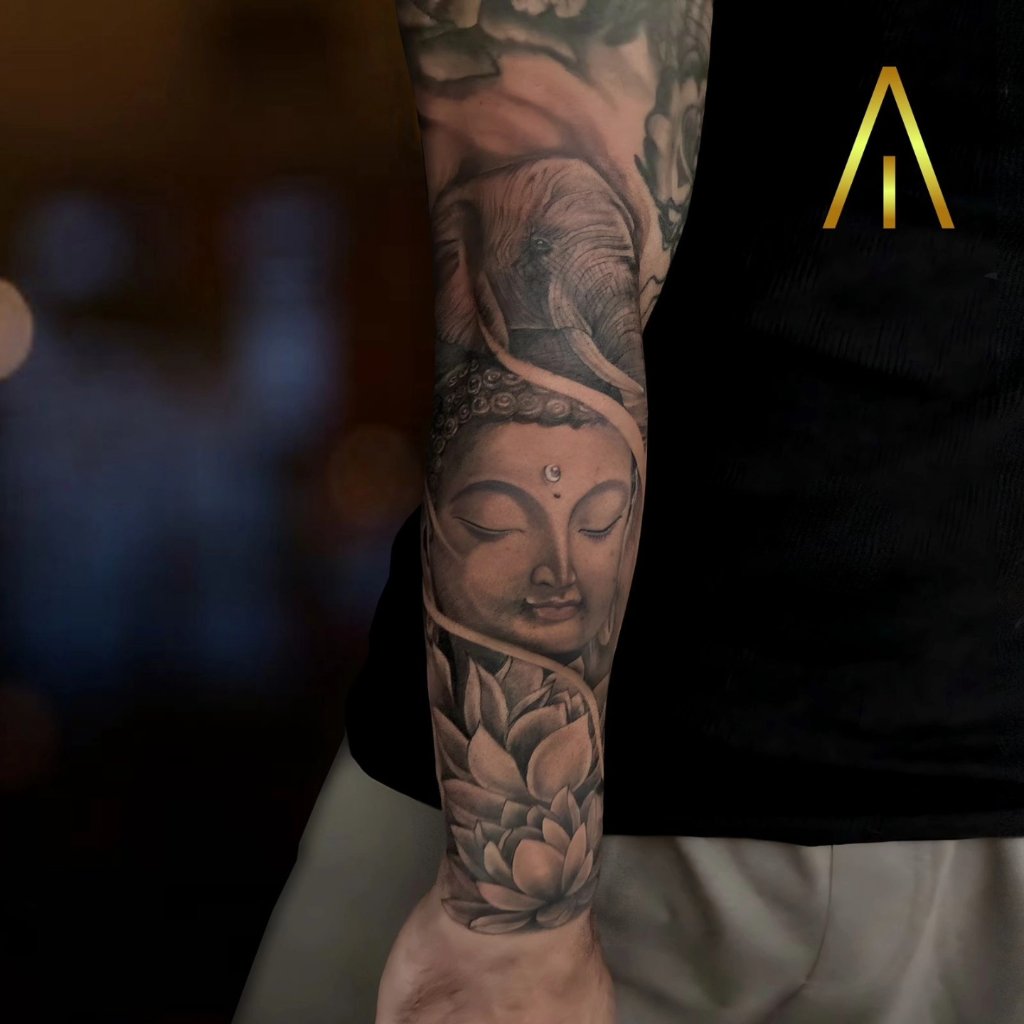
Best Placements for Realism Tattoos
Where you put a realism tattoo affects how it looks, how it ages, and how much detail it can hold.
The forearm is one of the most popular placements for realism. It's visible, it's relatively flat, and it holds detail well. The outer forearm in particular is a good canvas because it doesn't flex as much as the inner forearm and it's easy to protect from the sun.
The upper arm is another strong choice. It offers a large, relatively stable surface that works well for portraits and larger pieces. It's also easy to cover with clothing when you need to, which helps with sun protection.
The chest works well for larger realism pieces, particularly memorial portraits or religious imagery. The skin is relatively stable, though the area near the sternum can be more sensitive to tattoo.
The back is the largest canvas on the body and can hold the most detail. Full back pieces in realism are extraordinary, but they're a major commitment of time and money. The upper back is a good choice for a single large portrait or scene.
The thigh is an excellent placement that's often overlooked. The skin is stable, the area is large, and it's easy to protect from the sun. It's a good choice for larger realism pieces that you want to be able to cover.
The calf works for medium-sized pieces. It's relatively flat and holds detail reasonably well, though it can be more sensitive to tattoo than the thigh or upper arm.
Why very small realism tattoos often lose detail over time is important to understand. Realism depends on fine shading and subtle transitions. In a small space, there isn't room for those transitions, so the artist has to compress the detail. As the ink spreads over time, those compressed details blur together and the image loses its impact. A portrait the size of a coin will look like a smudge within a few years. If you want realism, go bigger than you think you need. A portrait should be at least the size of a playing card to hold its detail long-term, and bigger is better.
Is a Realism Tattoo Right for You?
Realism isn't the right style for everyone, and there's nothing wrong with that. Here's how to think about whether it suits you.
Realism is a good fit if you:
- Value detail and subtlety in artwork. Realism rewards close looking. If you're the kind of person who notices the small things, you'll appreciate what a well-executed realism tattoo offers.
- Have patience for the process. Realism tattoos take time. A portrait can take several hours over one or more sessions. A large piece can take months. If you're willing to sit for the work, you'll get a better result.
- Appreciate artwork as representation. If what draws you to tattoos is the ability to carry an image of someone or something meaningful with you, realism is the style that does that best.
- Are willing to invest in quality. Realism is not the place to look for a bargain. The skill required means it's priced accordingly, and trying to find the cheapest option usually leads to a tattoo you'll want to cover or fix later.
Realism may not be ideal if you:
- Want very small tattoos. As we discussed, realism needs space. If you're drawn to tiny, delicate pieces, fine line work is a better fit.
- Prefer bold, graphic styles. If what you love about tattoos is the boldness, the readability from across the room, the traditional tattoo aesthetic, realism will feel too soft and too quiet for you. Blackwork or traditional styles would serve that preference better.
- Have an extremely limited budget. This isn't about being excluded, it's about being honest. A cheap realism tattoo is almost always a bad realism tattoo, and fixing a bad one costs more than doing it right the first time. If budget is tight, consider saving up, choosing a smaller piece by a good artist, or exploring a different style that's less technically demanding.
- Want something that ages with heavy outlines. If longevity with minimal maintenance is your priority and you don't care about photographic accuracy, traditional or blackwork tattoos age more predictably with less effort.
Common Mistakes People Make
In my time tattooing, I've seen the same mistakes repeat themselves. Here are the ones to watch for.
Choosing price over quality. This is the most common and the most damaging. A realism tattoo is an investment. If you're choosing an artist based on who's cheapest, you're almost certainly going to be disappointed. A bad realism tattoo doesn't just look bad, it's harder and more expensive to fix or cover than it would have been to do right.
Using poor reference photos. We covered this above, but it's worth repeating. A blurry, low-light, low-contrast photo limits what even a great artist can do. Take the time to find the best possible reference.
Going too small. The temptation to keep a first realism tattoo small is understandable, but it's a mistake. Small realism loses detail fast. If you're not ready for a larger piece, consider a different style or wait until you are.
Ignoring aftercare. Realism tattoos are delicate during healing. The fine shading can lose ink if the tattoo isn't cared for properly. Follow your artist's aftercare instructions exactly, and don't rush the healing process.
Choosing an artist who doesn't specialise in realism. Not every good tattoo artist is a good realism artist. Realism is a specific skill set. An artist who does beautiful traditional work may not have the shading technique realism requires. Look at healed realism work specifically, not just fresh pieces, and choose someone whose realism portfolio is strong. Our guide on how to choose the right tattoo artist goes into this in more detail.
Frequently Asked Questions
Do realism tattoos fade faster?
They can, if they're not done well. Realism relies on fine detail and subtle shading, which softens over time like any tattoo. The key is contrast. A realism tattoo with strong dark and light values will hold up longer than one that's been shaded too softly. Sun protection and proper aftercare make a big difference too.
Are realism tattoos more expensive?
Generally, yes. Realism takes more time and more skill than most other styles. A portrait that takes four hours of careful shading costs more than a traditional piece of the same size that takes two. You're paying for the artist's time and their specific expertise, and in realism, that expertise is worth paying for.
Can realism tattoos be coloured?
Yes. Colour realism uses full colour to replicate the subject, and it can be striking. The trade-off is that colour fades faster than black ink, so colour realism may need more maintenance and touch-ups over the years. Black and grey realism is the more durable choice if longevity is a priority.
Do realism tattoos hurt more?
Pain is mostly about placement, not style. Your ribs will hurt more than your arm regardless of what's being tattooed. That said, realism often involves long sessions of shading, which can feel more draining than a quick linework piece. If pain is a concern, our tattoo pain guide breaks down what to expect by placement.
Can old tattoos be turned into realism tattoos?
Sometimes. It depends on the old tattoo, how dark it is, and where it is. A faded old tattoo can sometimes be incorporated into a new realism piece or covered entirely. A dark, bold old tattoo is harder to work with and may need laser lightening first. Talk to a realism artist about what's possible with your specific piece.
How long does a realism tattoo take?
It depends on size and detail. A small to medium portrait might take three to five hours in one session. A larger piece can take multiple sessions over several weeks or months. Your artist will give you a time estimate during consultation.
Are portrait tattoos difficult?
They're among the most difficult tattoos to do well. A portrait has to be accurate to a fraction of a millimetre or the face looks wrong. The eyes, the proportions, the expression, all of it has to be right. This is why portrait tattoos are where you see the biggest difference between a skilled realism artist and someone who isn't.
Can realism tattoos be covered later?
They can, but it's not easy. Realism uses a lot of ink, especially in the dark areas. Covering a realism tattoo usually requires something even darker and larger, or laser lightening first. If you think you might want to change or cover a tattoo in the future, realism is a style to think carefully about before committing.
Conclusion
Realism tattoos are one of the most rewarding styles in tattooing when they're done well. They let you carry a face, a moment, a piece of art that looks like life itself. But they ask for more than most styles, more from the artist, more from you during the process, and more from you in the years after.
If you've read through this and the appeal is still there, the next step is the most important one: find the right artist. Don't chase the cheapest quote. Don't rush the decision. Look at healed work, not just fresh photos. Talk to the artist about your idea and listen to what they say. A good realism artist will tell you honestly whether your idea will work, what placement will serve it best, and what you can realistically expect from the piece over time.
If you're in Chiang Mai and you'd like to talk through a realism idea with someone who does this work every day, we're happy to sit down with you. No pressure, no sales pitch, just a conversation about what you're looking for and whether we're the right studio for it. You can reach us through our contact page, and we'll take it from there. You can also browse our gallery to see examples of realism work from our artists.