
Artisan Ink
June 22, 2026
Pain is real. But what most people imagine beforehand and what they actually experience are usually very different things.
What Does Tattoo Pain Actually Feel Like?
- Scratching — the most common description for straightforward linework. Like a firm cat scratch moving across the skin repeatedly.
- Burning — more common during shading passes, particularly when working the same area repeatedly.
- Vibration — felt more than it's painful. The machine transmits a low vibration that some people find oddly meditative.
- Stinging — common in bony areas and thinner skin. Sharper and more acute.
- Pressure — felt most with larger needle groupings. Uncomfortable without being sharp.
Why Tattoo Pain Varies From Person to Person
Pain tolerance: Some people genuinely have higher thresholds.
Sleep: Coming in tired makes everything harder. The body's ability to manage discomfort drops significantly when it's fatigued. A well-rested client almost always has a better session.
Hydration: Dehydrated skin is more sensitive and heals more slowly. Drink water the day before and the morning of your session.
Stress and anxiety: Clients who arrive calm tend to report lower pain levels. Clients who arrive anxious often tense up, which increases discomfort.
Adrenaline: Early in a session, the body often releases a natural pain buffer. As the session continues and that adrenaline wears off, sensitivity can increase.
Previous tattoo experience: First-time clients rarely know what to expect, which amplifies anxiety. By a second or third tattoo, most people manage the experience much more calmly.
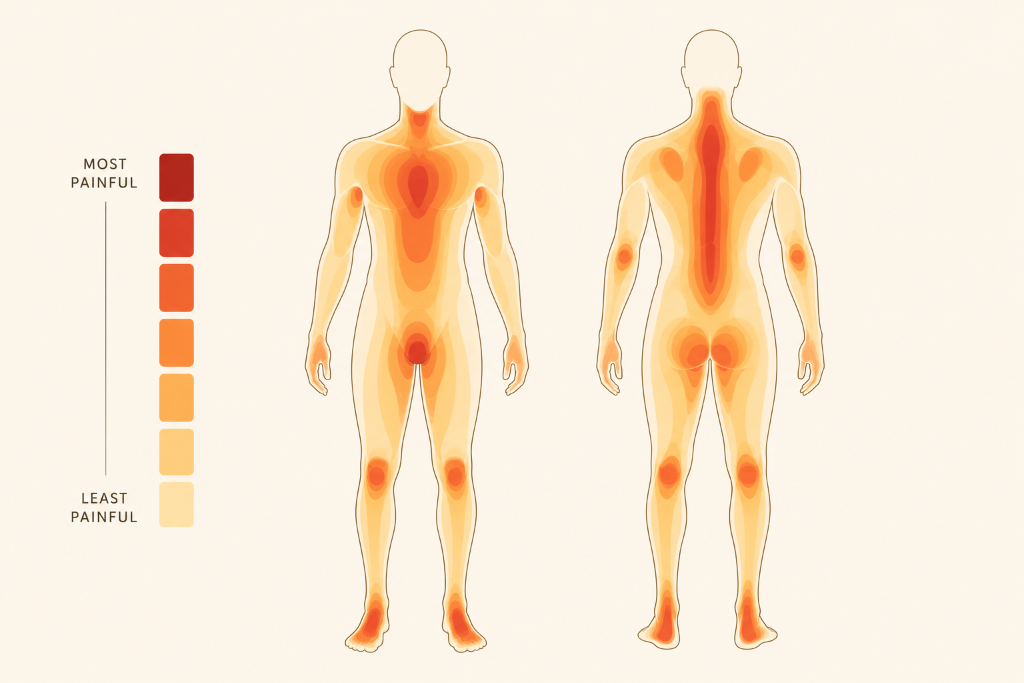
Tattoo Pain Explained by Placement
Least Painful Areas
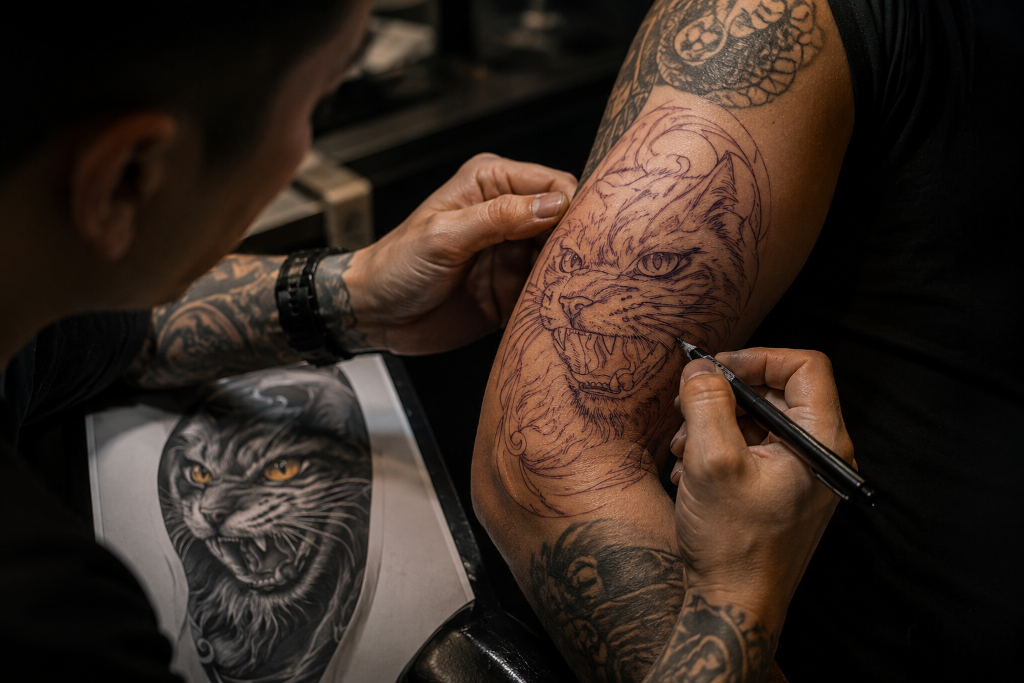
Outer upper arm: The go-to recommendation for a first tattoo for good reason. Good muscle coverage, relatively few nerve endings near the surface.
Forearm: Both inner and outer forearm tend to be very workable, with the outer forearm being slightly more comfortable.
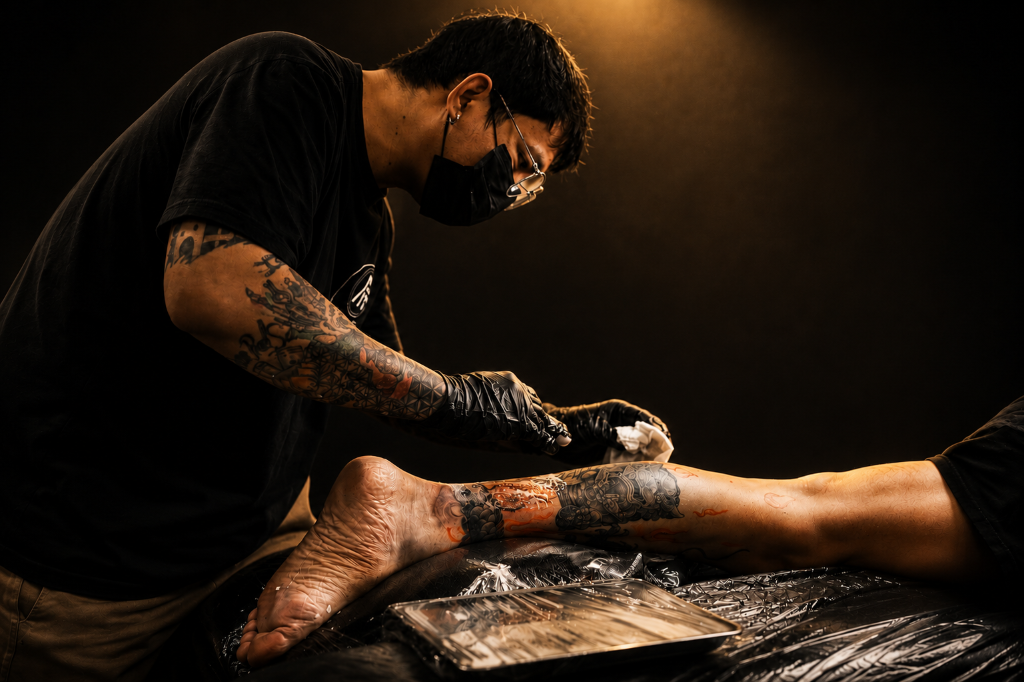
Calves: Good muscle mass, stable skin, and relatively low nerve density.
Upper thigh: Plenty of soft tissue, good distance from bone, and the skin tends to be consistent.
Moderate Pain Areas
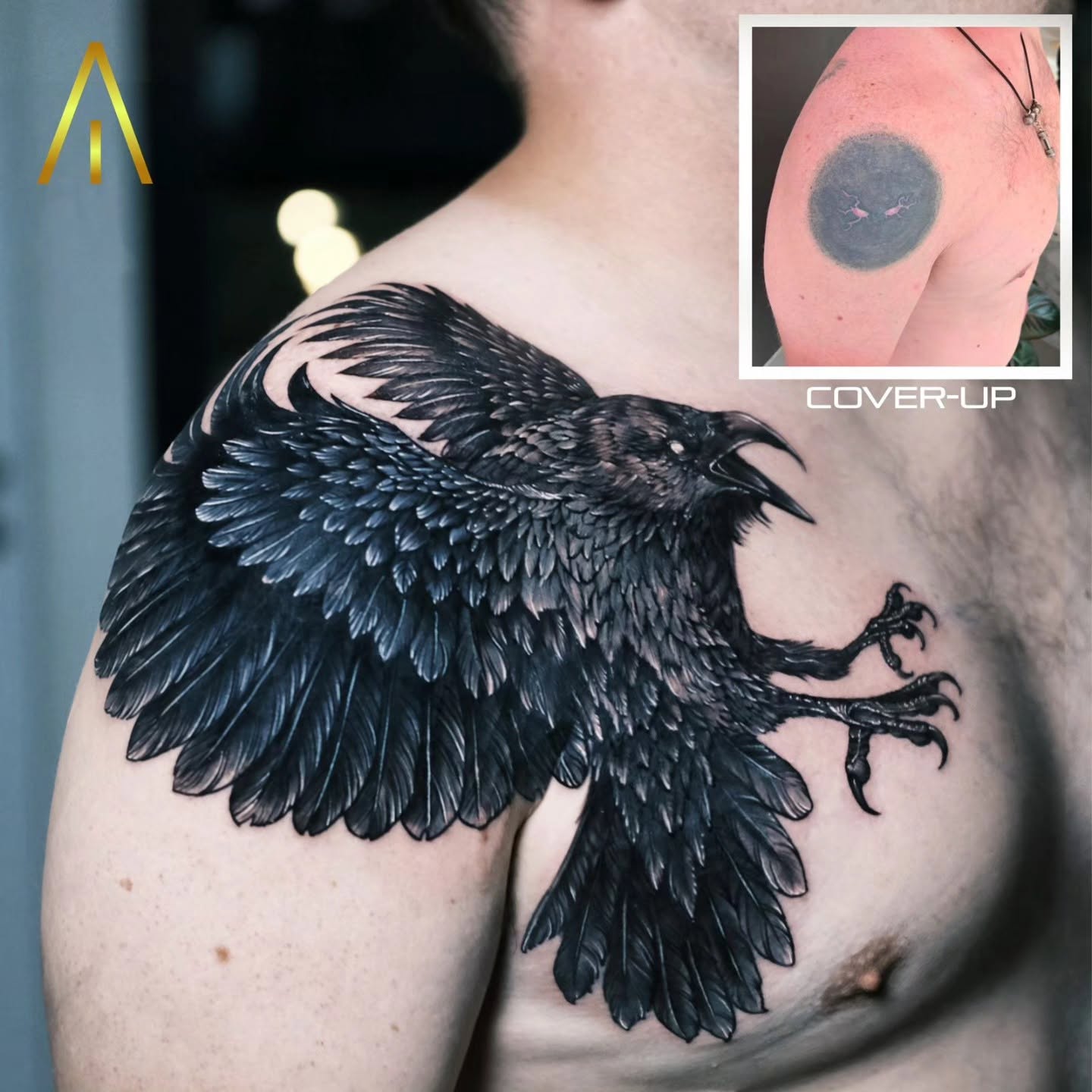
Shoulder: The meaty part of the shoulder is fairly comfortable. Closer to the shoulder blade or the edge of the joint, sensitivity increases as you approach bone.
Chest: Variable depending on exactly where the work sits. The upper chest and collarbone area are more sensitive.
Back: The mid and upper back are generally well-tolerated. The lower back can be more sensitive, particularly close to the spine.
Lower leg: The calf is comfortable; the shin is not. The shin sits directly over the bone with thin skin and is noticeably more intense.
Most Painful Areas
Ribs: Thin skin, bone close, and every breath moves the skin under the needle. For larger rib pieces this is a significant endurance challenge.
Sternum: Thin skin directly over bone, combined with the fact that the sternum is a sensitive area by nature.
Spine: The vertebrae sit very close to the surface along the spine, which creates an intense vibration sensation.
Neck: Highly innervated, close to major nerves and blood vessels, and the skin moves considerably with swallowing and head movement.
Hands and fingers: Very thin skin over bone, almost no padding, and extremely dense nerve endings. Finger tattoos also fade faster than virtually any other placement.
Feet and ankles: Similar issues to hands — thin skin, proximity to bone, and dense nerve endings. The top of the foot tends to be particularly uncomfortable.
Knees and elbows: The ditch of the elbow and the back of the knee are particularly sensitive due to the concentration of nerves in those joints.
Armpits: The axillary nerve runs directly through this area. Exceptionally uncomfortable for most clients.
Tattoo Pain Chart
- Low pain: Outer upper arm, outer forearm, calves, outer upper thigh
- Low-moderate pain: Inner forearm, inner upper arm, shoulder blade, upper back
- Moderate pain: Chest (away from sternum), mid-back, lower back, outer lower leg
- Moderate-high pain: Inner thigh, shin, front of knee, collarbone, lower chest
- High pain: Ribs, sternum, spine, neck, inner wrists, ankles, top of feet
- Very high pain: Fingers, hands, throat, armpits, back of knee, inner elbow
Does Tattoo Style Affect Pain?
Fine line tattoos: Typically use smaller needle configurations with lighter passes — many clients find this less intense than bold work.
Blackwork: Heavy packing of ink across large areas requires repeated passes to build solid saturation. The cumulative effect over a long session can be more wearing.
Colour tattoos: Often require more passes than black and grey work to achieve the right saturation and layering. Sessions can be longer, adding to fatigue-related sensitivity.
Realism tattoos: Involve significant shading work with larger needle groupings, which creates more of a burning sensation during those phases.
How Long Can Most People Sit for a Tattoo?
Small tattoos (under an hour): Virtually everyone manages without difficulty. Pain levels rarely build to anything significant before the session is over.
Medium sessions (2–4 hours): Most clients handle these well. There may be some fatigue towards the end, particularly in sensitive placements.
Full-day sessions (6–8 hours): This is where physical endurance becomes a real consideration. We build in regular breaks for food, water, and rest. We never push clients beyond what they can manage.
Tips to Make a Tattoo Hurt Less
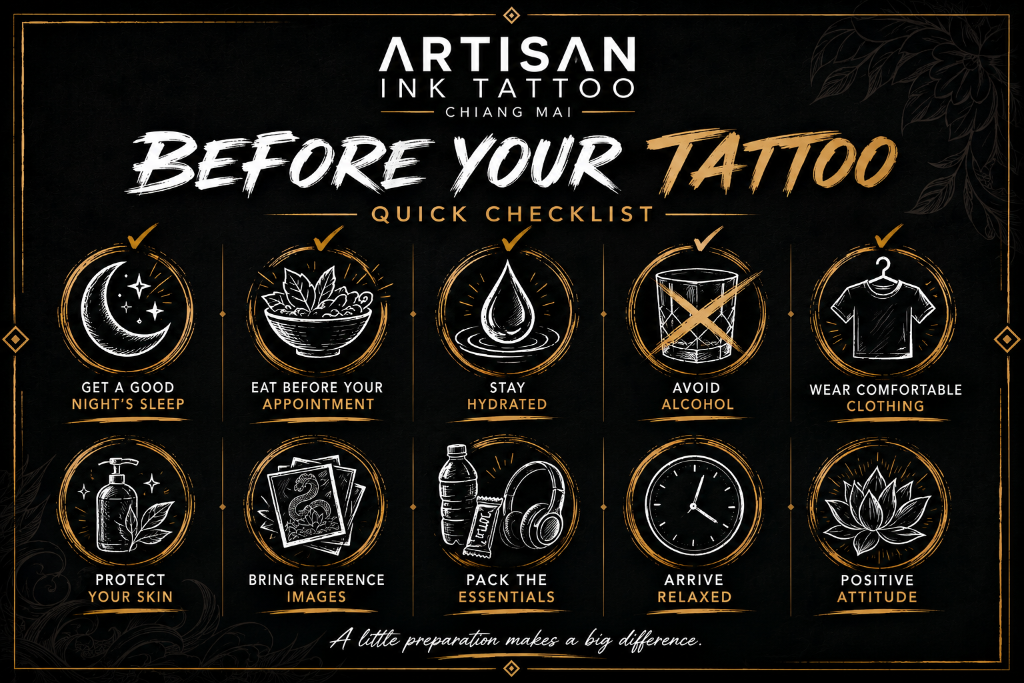
- Eat a proper meal beforehand. A solid meal 1–2 hours before your session helps significantly.
- Stay hydrated. Drink water the day before and morning of.
- Sleep well. A rested body handles discomfort better.
- Avoid alcohol for at least 24 hours beforehand. Alcohol thins the blood and dehydrates the skin.
- Wear appropriate clothing. Don't wear something that needs to be rearranged repeatedly.
- Take breaks when you need them. There's no award for suffering through.
- Distract yourself. Bring headphones, put on a podcast, watch something.
What Surprises Most First-Time Clients
The anticipation is worse than the reality: Almost without exception. The minutes in the waiting area are often the peak of anxiety. Once the needle touches the skin and they realise it's manageable, clients visibly relax.
It doesn't feel how they imagined: Most people conjure something sharp and prolonged. What they actually get is the scratching sensation, which is much less dramatic than expected.
The machine noise is worse than the needle: A surprising number of people find the sound of the tattoo machine more unsettling than what they feel. Once they acclimatise, the session becomes noticeably more relaxed.
They can handle it: The most common thing clients say when I finish, particularly first-timers, is: "I was so worried for nothing."
Tattoo Pain vs Tattoo Regret
Avoiding a tattoo placement purely because you're worried about pain is often the wrong call. Pain during a tattoo session lasts hours. A tattoo you compromised on because you were afraid can last a lifetime. A good artist will discuss this with you honestly.
FAQ
Does getting a tattoo hurt?
Yes, but for most people it's significantly more manageable than they expected. Most first-time clients are genuinely surprised by how tolerable it is.
What is the most painful place to get a tattoo?
The ribs, sternum, spine, hands, fingers, feet, and armpits — areas with thin skin, high nerve density, or proximity to bone.
What is the least painful place to get a tattoo?
The outer upper arm, outer forearm, calves, and outer upper thigh are consistently reported as the most manageable placements.
Do fine line tattoos hurt less?
Fine line work uses smaller needle configurations which many clients find less intense. However, placement still matters more than style.
Does colour tattooing hurt more?
Colour work often requires more passes, which can be more wearing over time. The difference is generally modest compared to placement.
How can I reduce tattoo pain?
Eat well beforehand, stay hydrated, get adequate sleep, avoid alcohol for 24 hours, wear comfortable clothing, and take breaks when needed.
How long does tattoo pain last?
During the session it's ongoing but manageable. Afterwards, most people experience sunburn-like tenderness for 24–48 hours, then mainly itching as it heals.
Does numbing cream work?
Topical numbing creams can reduce surface sensitivity. They don't eliminate sensation entirely and can affect how the skin behaves. Talk to your artist before using one.
Are second tattoos easier?
Usually, yes — not because the body becomes immune, but because you know what to expect. The anxiety of the unknown is a significant part of what makes first tattoos feel more intense.
Is tattoo pain worth it?
Ask anyone who's happy with their tattoo. The pain of the session is temporary. The result is permanent. The ratio makes sense for most people who've thought seriously about what they want.
Read more in our complete guide to getting a tattoo in Chiang Mai, or explore how to choose the right tattoo artist. Browse our gallery and when you're ready, reach out to start the conversation.
Questions about placement or what to expect?
Talk to Artisan Ink Chiang Mai →