Artisan Ink
July 20, 2026
Blackwork tattoos are one of the oldest and most striking tattoo styles in the world. At their simplest, they use only black ink to create bold, high-contrast designs on the skin. But that simplicity is deceptive. Behind every solid blackwork piece is a craft that demands precision, patience, and a deep understanding of how ink moves through skin.
If you've found yourself drawn to dark, graphic tattoos, whether a small geometric mark on the wrist or a full sleeve of layered patterns, you're already responding to what blackwork does best. It commands attention without needing colour. It ages with a kind of honesty that softer styles can't match. And it carries a visual weight that feels both ancient and modern at once.
This guide breaks down everything worth knowing before you commit: what blackwork actually is, where it comes from, the different forms it takes, how it feels, how it heals, and how to tell a good blackwork artist from a mediocre one. By the end, you'll have enough understanding to make a clear, confident decision about whether this style is right for you.
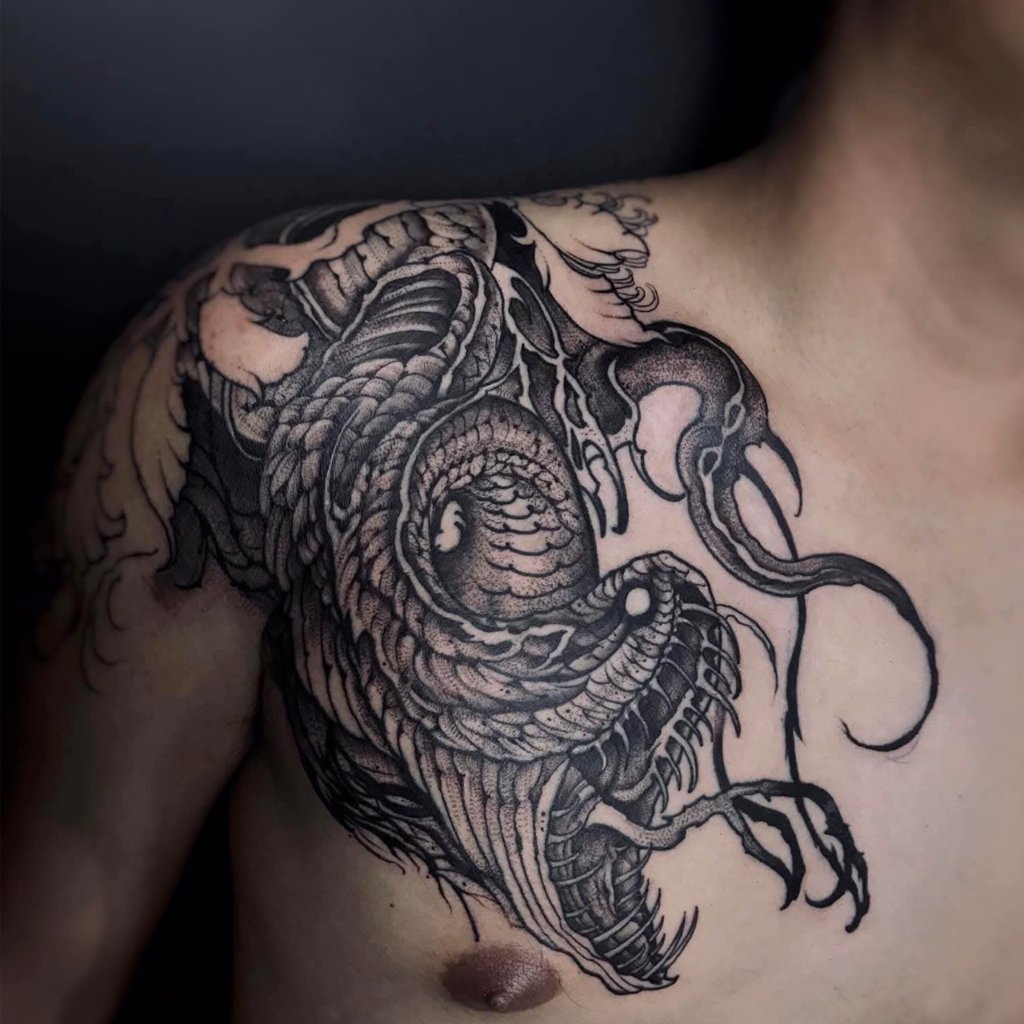
What Is a Blackwork Tattoo?
A blackwork tattoo is any tattoo created using only black ink. That's the technical definition, and it's the one most artists agree on. No colour, no grey wash, just black pigment applied at varying densities to build contrast, texture, and form.
Within that definition sits an enormous range of work. A thick solid band around an arm is blackwork. A mandala built from thousands of individual dots is blackwork. A silhouette of a raven across a shoulder blade is blackwork. The common thread is the absence of colour and the reliance on black pigment to do all the visual work.
What separates blackwork from styles like black and grey is the intent. Black and grey uses diluted black ink to create gradients and soft shading, often producing realistic portraits or smokey transitions. Blackwork leans into the density of the ink itself. It's about bold contrast, clean edges, and the deliberate use of negative space. Where black and grey whispers, blackwork speaks.
This distinction matters because it affects how the tattoo ages, how it's applied, and how it reads on the body over time. Blackwork is a style built to last, and that's part of why it has endured for thousands of years.
The History of Blackwork
Blackwork isn't a trend. It's arguably the original tattoo style. The earliest evidence of tattooing on human skin, Ötzi the Iceman, who lived around 3300 BCE, shows dark lines and markings that were almost certainly a form of blackwork. The ink was likely soot or plant-based pigment, and the technique was rudimentary, but the principle was the same as what we do today: deposit black pigment under the skin to create a permanent mark.
From there, blackwork appears in nearly every ancient tattooing culture. The Polynesians developed intricate black geometric patterns that told the story of a person's lineage and status. The Maori of New Zealand carved black pigment into the skin using chisels, creating raised grooves that remain some of the most technically demanding tattoos ever produced. In Borneo, Dayak people used black designs as spiritual protection. In ancient Egypt, blackwork figures appear on female mummies dating back to 2000 BCE.
What's striking is how little the core idea has changed. The tools are better now. The ink is safer and more consistent. But the fundamental act, using black ink to mark the body with meaning, is older than most written languages.
Modern blackwork as we see it in Western studios today draws from all of these traditions but doesn't belong to any single one of them. It's a contemporary style that borrows freely, sometimes carefully, sometimes less so. That borrowing is something to be mindful of, and we'll touch on it again when we talk about tribal-inspired work.
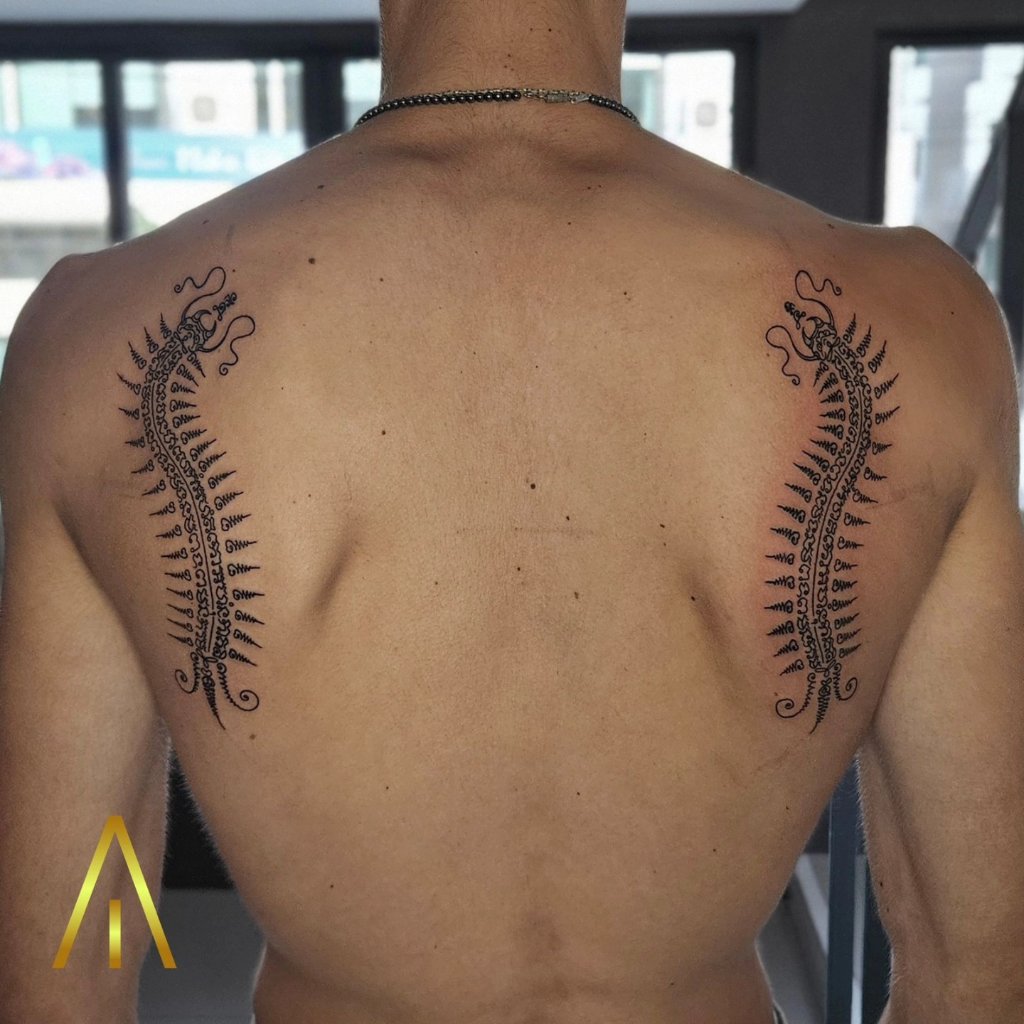
Different Types of Blackwork Tattoos
Blackwork is a broad umbrella. Underneath it are several distinct approaches, each with its own techniques, visual language, and challenges. Knowing the difference helps you talk to your artist in a way that gets you closer to what you actually want.
Traditional Blackwork
Traditional blackwork is the foundation. Bold lines, solid fills, limited shading, and a design that reads clearly from across the room. Think of classic American tattooing, anchors, daggers, roses, and eagles, rendered in solid black with no colour. The linework is thick and confident because it was built to survive decades on skin without blurring into mush.
Traditional blackwork is often the first style people think of when they hear the word tattoo. It's direct, readable, and unapologetic. If you want a tattoo that still looks like a tattoo in forty years, this is a safe bet.
Geometric Blackwork
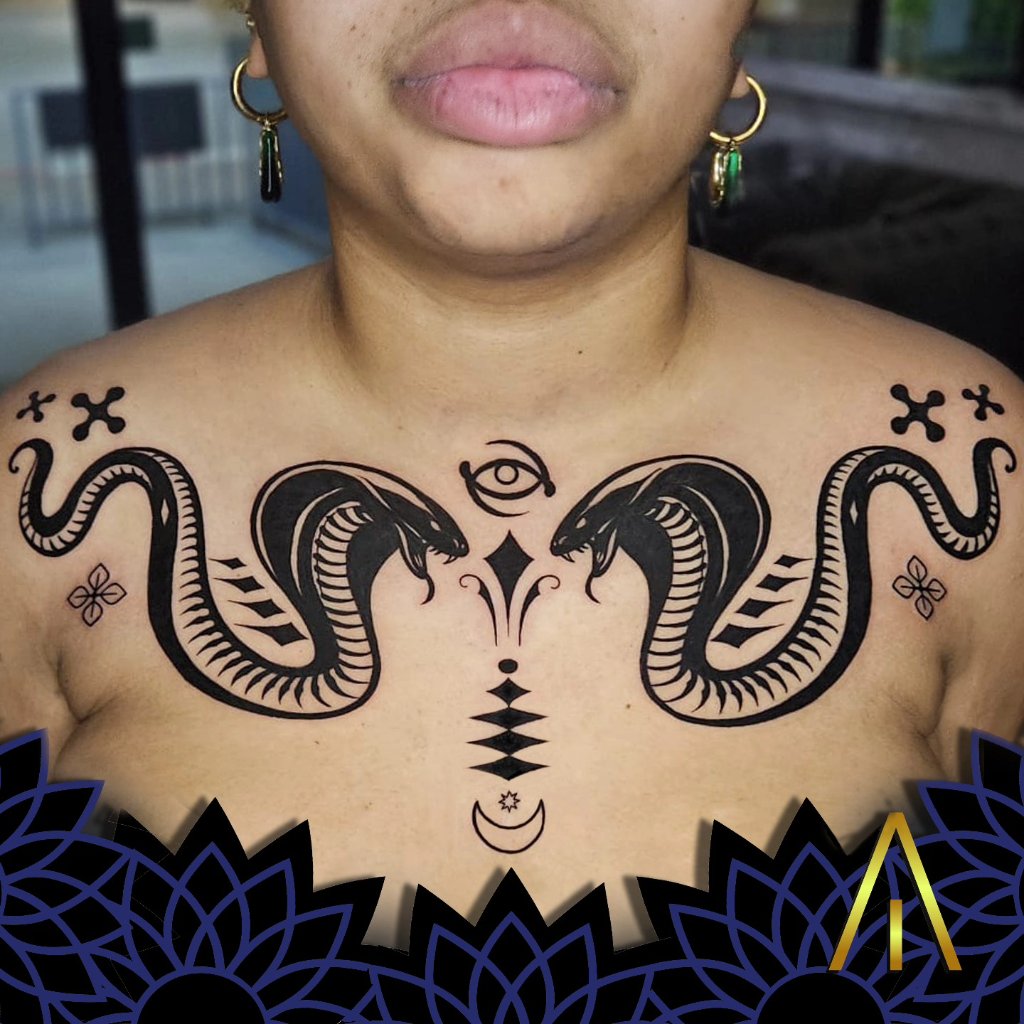
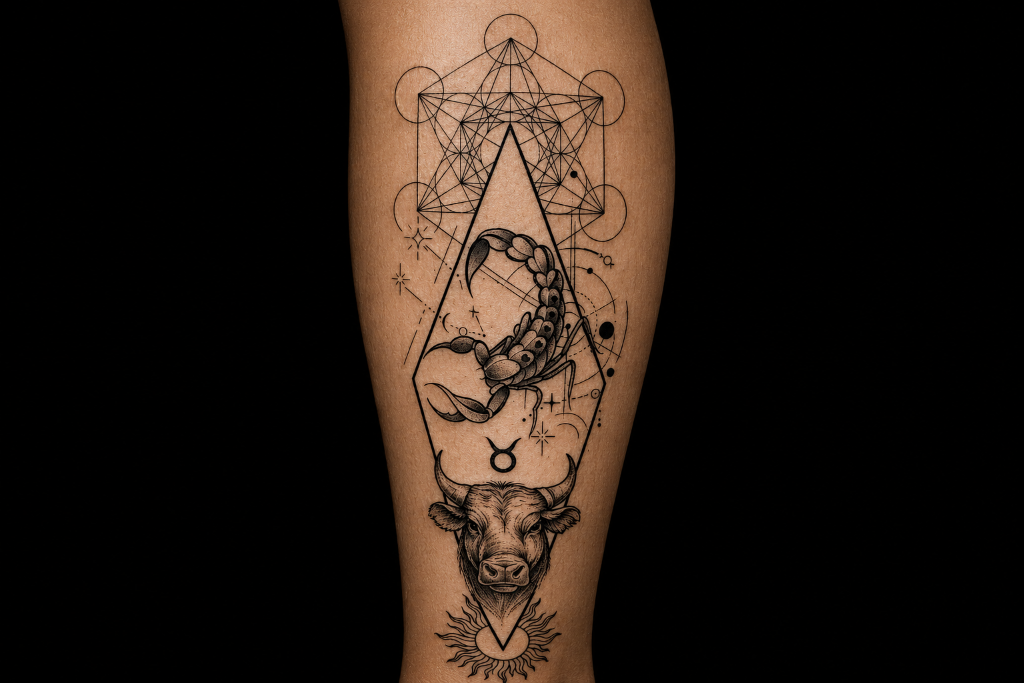
Geometric blackwork uses shapes, lines, and symmetry as the primary design language. Mandala patterns, sacred geometry, nested polygons, and precise linework that often radiates from a central point. This style requires a steady hand and an artist who understands proportion and balance, because in geometric work, every mistake is visible.
Geometric blackwork pairs well with the body's natural structure. A mandala placed over the sternum or a symmetrical pattern running down the spine works because it mirrors the body's own symmetry. When it's done well, the design feels like it belongs there. When it's done poorly, the eye notices immediately.
Ornamental Blackwork
Ornamental blackwork takes the decorative traditions of jewellery, lace, and architectural detailing and translates them onto skin. Fine linework, filigree, flowing patterns that curve around the body. It shares DNA with geometric work but is less rigid and more flowing. Think of the difference between a mandala and a chain of decorative flourishes that wraps around an arm.
This is one of the most popular forms of blackwork today, partly because it photographs beautifully and partly because it scales well. A small ornamental piece on a collarbone can be just as striking as a full ornamental sleeve.
Dotwork
Dotwork, sometimes called stippling, builds images from thousands of individual dots rather than continuous lines. The density of the dots creates the illusion of shading and depth. Up close, the work looks like a field of tiny marks. Step back, and a face, a mandala, or an astronomical scene emerges.
Dotwork is slow. An artist building a large dotwork piece might spend hours on a section the size of a playing card. The result is a softness that's hard to achieve with solid black alone. It's a style that rewards patience from both the artist and the client.
Tribal-Inspired Blackwork
This is the section that needs care. True tribal tattoos belong to specific cultures. Polynesian, Maori, Samoan, Hawaiian, and others have deep, living traditions where patterns carry specific meanings tied to lineage, achievement, and spiritual protection. These designs are not decorative in their original context. They are identity.
Tribal-inspired blackwork refers to modern work that draws on the visual language of those traditions without claiming to be authentic cultural tattooing. This is a legitimate approach when done with respect and awareness. The problem arises when artists copy sacred patterns wholesale, or when clients wear symbols whose meaning they don't understand.
If you're drawn to this style, talk to your artist about what you're actually looking for. A good artist will help you create something original that honours the aesthetic without appropriating specific cultural meanings that don't belong to you. In some cases, the right answer is to seek out an artist from that culture who can give you an authentic piece through the proper channels.
Illustrative Blackwork
Illustrative blackwork treats the tattoo like a drawing. It might depict animals, botanical studies, mythical creatures, or scenes rendered entirely in black ink, often with crosshatching, stippling, and linework combining to create texture and depth. It's where fine art and tattooing overlap.
This style is demanding because it relies entirely on the artist's drawing ability. There's no colour to hide behind and no bold traditional linework to lean on. If the composition is weak, the tattoo will look weak. When it's done well, illustrative blackwork can look like a charcoal drawing that happens to live on skin.
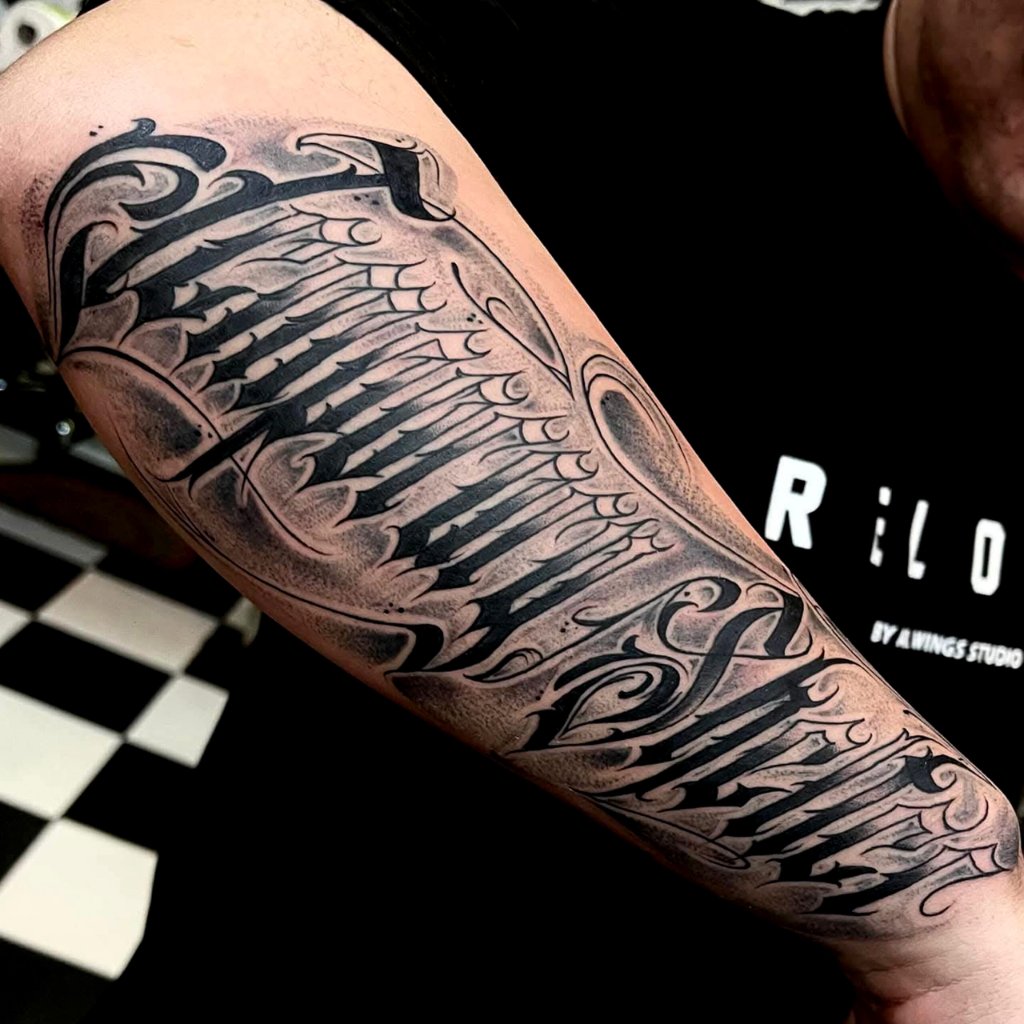
Why People Love Blackwork Tattoos
There's a reason blackwork has never gone out of style. It offers something most other styles can't quite match: permanence with presence.
A colour tattoo can fade unevenly. A fine line tattoo can blur over time. A black and grey realism piece can lose its detail as the ink settles. Blackwork, when applied well, ages more predictably. Solid black ink holds its edge longer than any other pigment, which means a bold blackwork piece will still read clearly in twenty years, even if the skin around it changes.
There's also a visual confidence to blackwork that attracts people. It doesn't ask for attention through colour or trend. It states itself plainly. For a lot of people, that directness is the whole appeal. A blackwork tattoo says what it says and doesn't decorate itself to be more palatable.
For others, the appeal is the versatility. Blackwork scales from a tiny single mark to a full body suit. The same visual language works on a finger, a ribcage, or a back. You can start with one small piece and build outward over years, and the work will feel cohesive because it shares the same tonal foundation. If you're considering how a new piece might sit alongside fine line tattoos you already have, blackwork often complements them better than colour would.
Pros of Blackwork Tattoos
If you're weighing blackwork against other styles, here's what it genuinely does well.
Longevity is the big one. Solid black ink holds up against sun and time better than any other pigment. A bold blackwork tattoo will age more gracefully than a delicate watercolour piece or a highly detailed realism tattoo. This isn't a guarantee, skin, sun exposure, and aftercare all play a role, but the odds are in your favour.
Contrast is another strength. Blackwork on light skin reads with striking clarity, and on darker skin, properly applied black ink can still hold a strong graphic presence. The high contrast means the design stays legible even as some softening occurs over the years.
Simplicity of care is underrated. A blackwork tattoo doesn't require special colour-safe products or complicated touch-up schedules. The aftercare is straightforward, and touch-ups, if they're ever needed, are usually simple.
Cohesion matters if you plan to collect multiple tattoos. A collection of blackwork pieces, even by different artists, tends to look more unified than a mix of colour, realism, and fine line work. If you're building a sleeve or a full leg piece over time, starting in blackwork gives you a strong foundation to expand from.
Potential Downsides
No style is perfect for everyone, and blackwork has its trade-offs.
The first is commitment. A solid black area is exactly that, solid black. There's no subtle way to remove or lighten it without laser work, and laser removal of dense black ink is a long, uncomfortable, and expensive process. If you're someone who likes to change your mind, blackwork is not the forgiving choice.
Coverage is another consideration. If you have existing tattoos you want to work around, blackwork can be tricky. It reads so strongly that it tends to dominate whatever it sits next to. A blackwork piece beside a faded colour tattoo can make the older work look tired by comparison.
Healing can be more intense for large solid areas. The skin takes a real amount of ink to build up a solid black field, which means more trauma during the session and a longer, more tender healing period. Large blackwork pieces can peel heavily and feel tight for a week or more.
There's also the question of trends. Some forms of blackwork, particularly certain geometric and ornamental patterns, have become very popular on social media. What looks striking today may feel dated in a decade if you've chosen a design more for its current popularity than for its personal meaning. This is true of any style, but blackwork's permanence makes it more important to choose carefully. Our piece on custom tattoos versus flash tattoos covers this tension in more detail.
Do Blackwork Tattoos Fade?
Everything fades eventually. That's the honest answer. But blackwork fades more slowly and more predictably than most styles, and that's one of its real advantages.
Black pigment is the most stable ink used in tattooing. It doesn't break down under UV light the way coloured pigments do, which means it holds its density longer. A solid black band that goes in dark will still be clearly dark a decade later, even if the very edge has softened slightly.
The factors that affect fading are the same for any tattoo. Sun exposure is the biggest one. UV light breaks down ink over time, regardless of colour. Skin type matters, as does placement. Areas that rub against clothing or flex constantly, like fingers, feet, and inner wrists, tend to fade faster than areas with stable skin like the outer arm or thigh.
How the tattoo was applied matters too. Ink deposited at the right depth stays put. Ink placed too shallow gets pushed out during healing. Ink placed too deep can spread under the skin, causing a blurred edge known as a blowout. A skilled blackwork artist understands the depth that solid black requires, and that's part of why experience matters so much in this style.
Are Blackwork Tattoos More Painful?
Pain in tattooing is mostly a question of placement, not style. Your ribs will hurt more than your outer arm regardless of what's being tattooed. That said, blackwork does have some characteristics that can affect how a session feels.
Solid black areas require multiple passes with the needle to build up density. The first pass lays ink into the skin. The second and third passes pack more ink into the same area to create the solid, opaque finish that defines the style. Those repeated passes over the same skin can feel more intense than a single-pass line tattoo.
Large needle groupings, often used for filling solid areas, create more of a pressure and vibration sensation than the sharp scratching of a fine liner. Some clients find this easier. Others find the broadness of it more uncomfortable. It varies from person to person.
Dotwork tends to be less painful per mark, since each dot is a single small puncture, but the cumulative effect over a long session can wear on you. A large dotwork piece might be less intense moment to moment but more exhausting overall simply because of the time involved.
If pain is a concern, and for many first-time clients it is, our tattoo pain guide breaks down how different placements and styles actually feel, with honest comparisons from experienced artists.
How Long Do They Take?
Time depends on size, density, and complexity. A small solid black band might take thirty minutes. A geometric mandala the size of a saucer might take two to three hours. A full blackwork sleeve is a multi-session project that can span months, with sessions of four to eight hours each.
Solid black fills are slower than linework because of the repeated passes. An area that looks small on the body can take surprising time to fill properly. Dotwork is the slowest of all. A dotwork piece the size of your hand might take longer than a solid black piece twice its size.
Your artist should give you a time estimate during consultation. If they don't, ask. Understanding the time commitment helps you prepare properly: food, water, entertainment, and a clear schedule afterward for healing. Longer sessions are physically demanding, and arriving prepared makes a real difference to how you experience them.
Who Is Blackwork Best Suited For?
Blackwork suits a wide range of people, but it's especially good for certain clients.
If you want a tattoo that will age predictably and still look sharp in two decades, blackwork is one of the strongest choices. The permanence of solid black ink is a feature, not a limitation, for people who think in long timeframes.
If you're building a collection and want it to feel cohesive, blackwork gives you a tonal foundation to expand from. Starting with blackwork doesn't lock you into one style, but it does give every future piece a visual anchor.
If you're drawn to graphic, high-contrast design and find colour tattoos visually noisy, blackwork speaks your language. It's the style for people who want clarity over decoration.
It's also well suited to people who want a tattoo with a clear, readable meaning. A blackwork symbol or mark reads plainly. There's no ambiguity in a solid shape the way there can be in an abstract colour piece.
Where blackwork is less ideal is for clients who want something subtle or easily hidden. Blackwork is bold by nature. If you're looking for a tattoo that disappears under professional clothing or reads as delicate, this isn't the style. Fine line work or soft black and grey would serve that goal better.
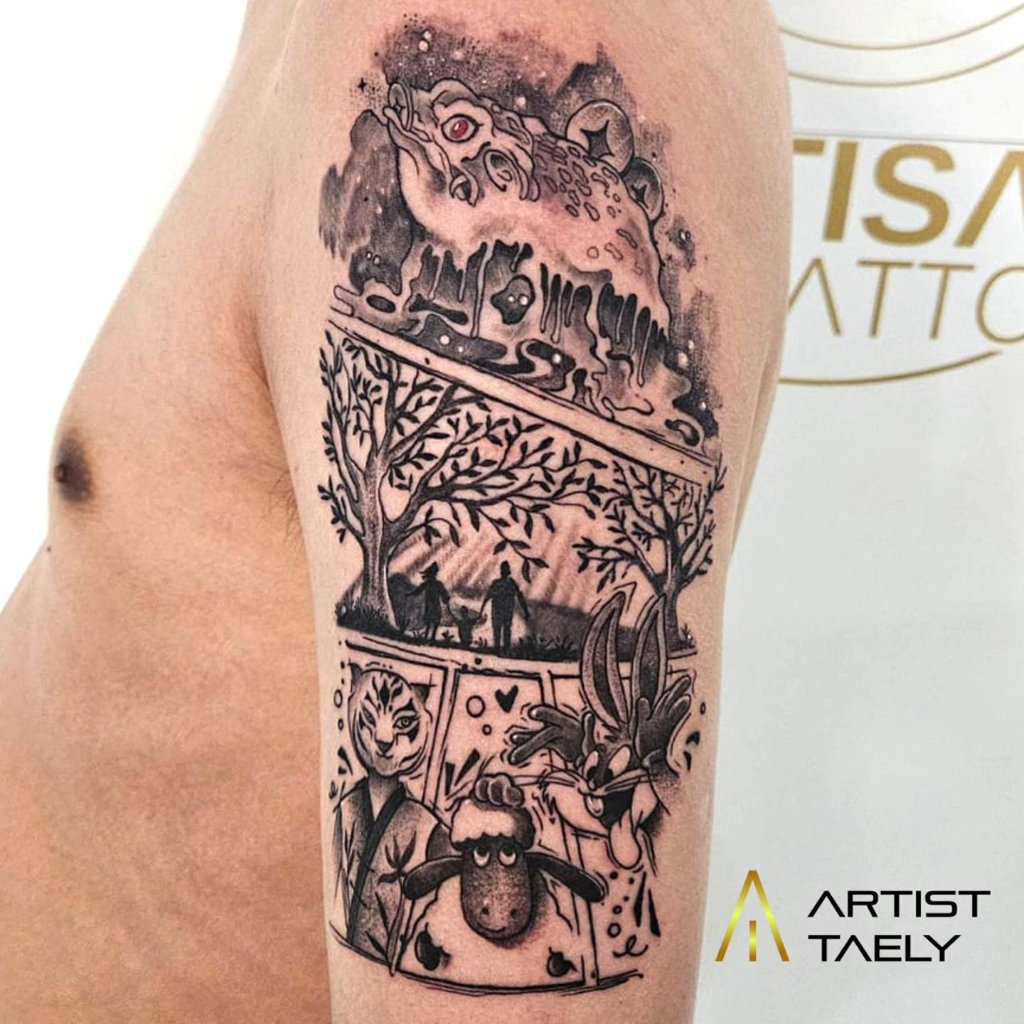
How to Choose the Right Blackwork Artist
This is the part that matters most. A great design in the hands of a mediocre artist becomes a mediocre tattoo. A simple design in the hands of a skilled artist becomes something lasting. In blackwork, where there's no colour to distract and no soft shading to hide imperfection, the artist's skill is on full display.
Look at healed work, not just fresh photographs. Fresh blackwork looks crisp and dark because the ink is still sitting near the surface and the skin is slightly swollen. Healed blackwork tells the truth. Has the ink held its density? Are the edges still clean? Has the solid black settled evenly, or does it look patchy? An artist who can show you healed work is an artist who stands behind what they do.
Study the linework. In blackwork, line consistency is everything. A wobble in a single line is visible forever. Look for lines that are confident, even, and unbroken. If you see hesitation or inconsistency in a portfolio, that will show up in your tattoo too.
Ask about their approach to solid fills. Filling a large area with even black ink is harder than it looks. Ink can go in unevenly, leaving darker and lighter patches within the same field. A skilled blackwork artist has the technique to build density evenly, which only comes with experience.
Talk to them. A good artist will discuss placement, longevity, and the practical realities of the piece you're considering. If they rush you, dismiss your questions, or pressure you into more than you want, that's a signal. Blackwork is permanent. The conversation before it should feel like it matters. Our guide on how to choose the right tattoo artist covers this in more detail, and most of the principles apply equally to blackwork.
Blackwork Tattoo Aftercare Tips
Blackwork aftercare isn't wildly different from any other tattoo, but a few points deserve attention because of the style's characteristics.
Large solid areas tend to weep more ink during the first couple of days. This is normal. The skin has taken a lot of pigment, and some of it sits near the surface before the skin closes over. Keep the area clean, follow your artist's washing instructions, and don't panic if the transfer paper or dressing shows ink stains.
Keep it moisturised but not drowning. A thin layer of the aftercare product your artist recommends is enough. Heavy application can suffocate the skin and slow healing. Light and frequent is better than thick and occasional.
Avoid sun during healing. This is true for every tattoo, but UV exposure during the first few weeks can affect how black ink settles. Keep the area covered or indoors as much as possible during the initial healing phase.
Expect heavier peeling with large solid areas. The skin over a filled black field sheds more noticeably than skin that took only linework. This can look alarming but is part of normal healing. Don't pick at it. Let it come off on its own.
Once healed, sunscreen becomes your long-term maintenance habit. Daily SPF on the tattooed area, not just when you're at the beach, will keep the black ink dense and the edges sharp for years longer than unprotected exposure would allow. Our tattoo aftercare guide walks through this in more detail.
Questions We Often Get Asked
Can Blackwork tattoos be covered up?
Yes, but with limitations. Because black ink is so dense, covering a blackwork tattoo requires something even darker or larger to go over it. Often the only option is more blackwork, a solid black cover or a heavier design that incorporates the existing piece. Laser lightening beforehand is sometimes the better path if you want flexibility later. If you think you might want to change or cover a tattoo in the future, blackwork is a style to think carefully about before committing.
Are they more expensive?
Pricing depends on the artist and the time involved, not the style itself. That said, large blackwork pieces tend to take more time than equivalent colour work because of the repeated passes needed for solid fills. Dotwork in particular is time-intensive. The honest answer is that a well-executed blackwork tattoo costs what the artist's time and skill are worth. Bargain hunting in tattooing rarely ends well.
Can colour be added later?
Technically yes, but it rarely looks good. Colour over solid black doesn't show through, so any added colour has to sit beside or around the existing blackwork. Some artists build blackwork pieces knowing colour might come later, leaving space for it. If you think you might want colour eventually, tell your artist during the design stage. It changes how they plan the piece.
Do they age well?
Better than most. Solid black ink holds its density longer than any other pigment. The lines stay readable, the fills stay dark, and the overall design holds together visually over decades. This is one of blackwork's genuine strengths. Compare it to fine line work, which can blur, or colour realism, which can fade unevenly, and blackwork comes out ahead in longevity.
Are they suitable for first tattoos?
They can be. A small blackwork piece, a simple band, a single geometric mark, a small silhouette, is a perfectly reasonable first tattoo. What's less advisable as a first tattoo is a large solid black area, because the physical experience of long sessions and heavy fills is something to build up to rather than start with. If blackwork is calling to you for your first tattoo, start smaller than you think you want. You can always add more.
Are they harder to remove?
Yes. Laser removal works by breaking up pigment particles so the body can carry them away. Black ink absorbs laser energy well, which is actually helpful, it responds to treatment more readily than some colours. But dense solid black means there's a lot of pigment to break down, which means more sessions, more time, and more discomfort. Removal is possible, but it's never quick, never cheap, and never as clean as people hope. The best approach is to treat the decision as permanent from the start.
A Note on Sources and Further Reading
If you'd like to read more about the history and science behind blackwork, these are three sources we trust:
- The Smithsonian's coverage of Ötzi the Iceman for the earliest documented blackwork tattoos.
- World History Encyclopedia on tattooing in ancient Egypt for the early cultural record.
- The American Academy of Dermatology's guidance on tattoos for the dermatological side of ink, healing, and removal.
Is Blackwork Right for You?
Blackwork isn't for everyone, and that's exactly what makes it a meaningful choice for the people it suits. It's a style that asks for commitment and rewards it with longevity. It's a style that values clarity over trend. And it's a style where the skill of the artist shows in every line and every filled area, because there's nothing else to look at.
If you've read this far and the appeal is still there, the next step isn't to pick a design from a search and book the first available appointment. It's to find an artist whose work you respect, sit down with them, and talk through what you're actually drawn to and why. A good blackwork artist will help you refine a vague idea into something specific, tell you honestly whether what you want will work on the placement you have in mind, and guide you toward a piece that still feels right in twenty years.
Blackwork rewards thought. Take the time to think it through properly, and you'll end up with something that stays with you in the best possible way. If you'd like that conversation with an experienced artist, we're happy to have it.