
Artisan Ink
June 9, 2026
One of the first questions people ask when they're planning to get tattooed in Chiang Mai is: how much will it cost? It's a completely reasonable question — and one that deserves a straight answer rather than vague deflection. The honest truth is that there's no single number. Tattoo pricing is genuinely variable, and understanding why helps you approach it with the right expectations.
What I can tell you clearly: the factors that drive cost, what separates studios that price transparently from those that don't, and why the cheapest option in this particular industry has a habit of becoming the most expensive one in the long run. Having spent years inside a premium studio environment, I've seen both sides of this equation play out more times than I can count.
Why There's No Simple Answer
People search for a number. "How much for a tattoo in Chiang Mai?" — as if there's a menu price the way there might be for a haircut. There isn't, and any studio that gives you a confident quote within thirty seconds of hearing your idea either isn't listening or isn't planning to deliver custom work.
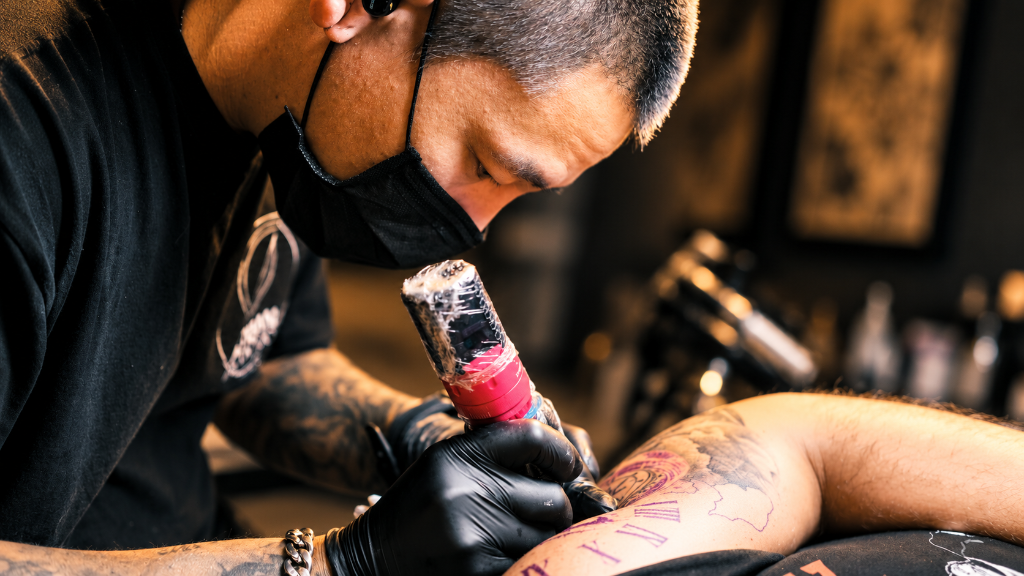
A tattoo is a bespoke, handcrafted, permanent piece of art applied to a moving, living body. The scope of what that involves varies enormously. A small fine line botanical on a forearm takes a fraction of the time and skill investment of a full sleeve in photorealistic colour. Treating them as the same category of thing would be like asking how much a painting costs.
That said — understanding the variables gives you a meaningful framework for planning and budgeting. Here's what actually drives the cost of a tattoo in Chiang Mai.
The Factors That Determine Tattoo Pricing
Size
This is the most intuitive factor. Larger tattoos take more time. More time means more cost. But size is not the only variable — a small, highly detailed piece can take as long or longer than a large, simple one. Size tells part of the story. It doesn't tell the whole story.
Detail and Complexity
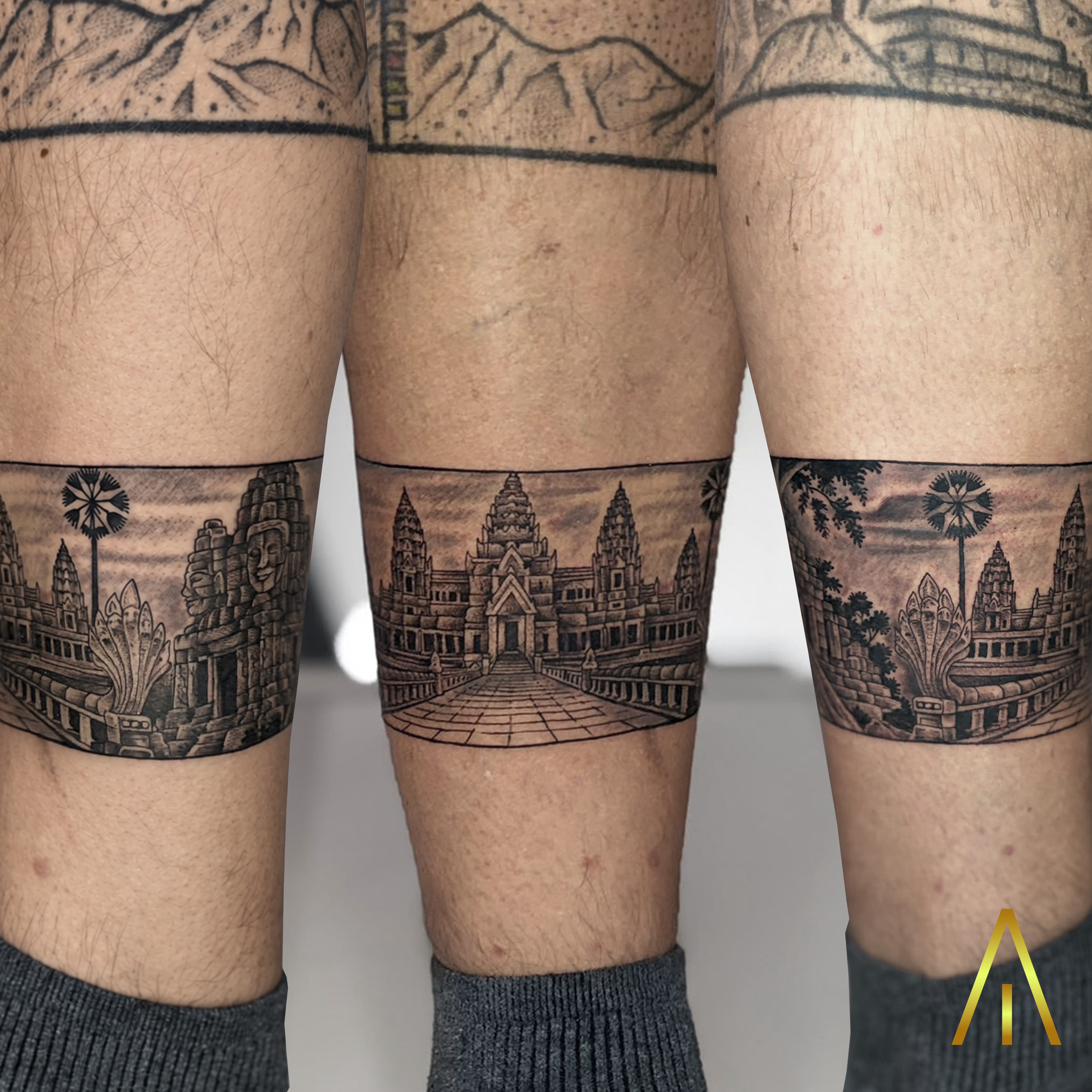
A piece with intricate detail — fine linework, dense texture, complex shading, micro-realism — takes significantly longer than something with clean, simple lines. Detail demands precision. Precision demands time. And the higher the technical demand, the more important it becomes to work with an artist who has genuinely mastered that approach.
When comparing quotes between studios, complexity is often the variable being quietly underestimated by cheaper options. A studio that quotes low on a detailed piece is either planning to rush it or has a different understanding of what "detailed" means than you do.
Placement
Where a tattoo sits on the body affects both the technical difficulty and the time involved. Some placements are straightforward. Others — ribs, hands, throat, behind the ear, the sternum — require more careful positioning, more client management around discomfort, and more technical precision to navigate the natural contours of the area. This is reflected in session time.
Style
Different tattoo styles carry different time and skill requirements. Blackwork or tribal patterns require confident, precise line work but move relatively quickly. Traditional Japanese sleeves involve elaborate composition and deep colour packing that stretches across multiple sessions. Photorealistic portraiture is arguably the most technically demanding style in the industry — the margin for error is almost zero, and the time investment per square inch is substantial.
Browse our full gallery to see the breadth of styles our artists work across — it gives you a realistic sense of what different approaches look like and the level of investment they represent.
Color
Color tattoos typically take longer than comparable black and grey work. Packing color to a saturated, smooth finish requires more passes, more needle changes, and more careful technique than greyscale shading. Premium imported inks — which behave more consistently and hold their vibrancy longer — also represent a cost investment on the studio's side that is reflected in the final price.
Artist Experience and Reputation
This is the variable people sometimes push back on, but it's the most legitimate one of all. An artist who has spent ten years developing a specific style, who has a waiting list because demand for their work outpaces their availability, who has built a verifiable international reputation — that artist commands a higher rate than someone with two years of experience. This is true of every skilled profession in the world, and tattooing is no different.
What you're paying for at the top end isn't just the hours — it's the decade of refinement, the thousands of pieces that preceded yours, the depth of knowledge that goes into every decision about composition, technique, and longevity. You're buying the outcome of that investment, not just the session itself.
Design Complexity and Custom Development
A flash design — pre-drawn, adapted slightly for your placement — involves minimal pre-session work. A fully custom piece, developed from scratch specifically for you, involves hours of design work before a needle is even picked up. Research, sketching, revision rounds, stencil preparation. That creative investment has value. Reputable studios reflect it honestly in their pricing.
Number of Sessions
Large or complex pieces are completed across multiple sessions — both because the human body can only take so much in a single sitting, and because the work genuinely requires more time than a single day allows. Each session is priced accordingly. For ambitious multi-session projects, the total investment can be significant — and should be understood clearly before you begin, not discovered partway through.
Skin Condition and Previous Work
Tattooing over old work — whether a cover-up or an extension of an existing piece — presents additional technical complexity. Heavy scarring, certain skin conditions, or significant sun damage to an area can all affect how the skin receives ink and how long the process takes. These factors aren't always predictable until the artist sees the area in person, which is one of many reasons an in-person consultation is irreplaceable.
What Tattoo Pricing Looks Like in Chiang Mai
Chiang Mai's tattoo market spans an enormous range — from tourist-facing flash studios charging very little, to internationally recognised artists at premium studios whose rates are competitive with London or New York. Both exist, and the gap between them in terms of quality and experience is considerable.
At a reputable custom studio in Chiang Mai, pricing is typically structured around either a session-based rate or a piece rate agreed before work begins. You should receive a clear estimate during your consultation — not a definitive fixed price necessarily, but a realistic range based on the scope of the work discussed.
What I can say honestly: quality custom tattooing in Chiang Mai offers genuinely exceptional value compared to the West. Work that would cost substantially more in London, Sydney, or New York is achievable here at a meaningfully lower price point — not because the artistry is lesser, but because cost of living and market conditions are different. That's a real advantage for international clients. It's not an excuse to treat tattooing as a cheap commodity.
Why Cheap Tattoos Become Expensive Mistakes
I've seen this play out countless times. Someone finds a studio offering dramatically low prices. The work looks acceptable in the photos. They book. And six months later, they're sitting across from a different artist asking what it would take to fix, rework, or cover what they got.
Cheap tattoos cut corners somewhere. They always do. Sometimes it's time — the session is rushed, the detail is simplified, the shading is inconsistent. Sometimes it's materials — lower grade inks that fade unevenly or bleed under the skin. Sometimes it's hygiene — savings made in the places clients can't see. Sometimes it's simply a skill level that can't deliver what was promised.
The cost of a bad tattoo isn't the original price. It's the original price, plus a cover-up or laser removal that may cost several times more, plus the knowledge that something permanent on your body represents a decision made under-informed.
A tattoo is not a purchase you can return. The value of getting it right the first time is difficult to overstate.
"The most expensive tattoo you'll ever get is the one you need fixed."
Consultation-Based Pricing — Why It's the Right Model
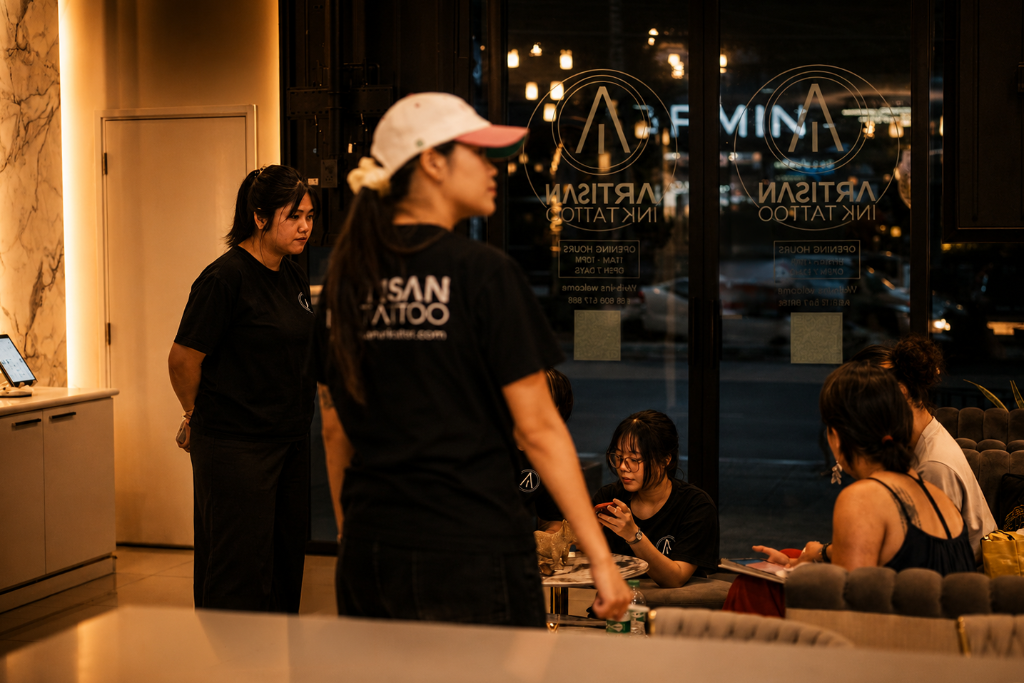
At Artisan Ink, we don't give prices before conversations. This isn't evasiveness — it's the only intellectually honest way to price custom work. Until we understand what you're actually asking for, any number we give you is meaningless.
The consultation is where pricing becomes real. We'll talk about your idea in detail. Your artist will understand the scope, the complexity, the placement, the style, and the design investment required. From that conversation, we can give you a genuine, accurate estimate — one that reflects the actual work involved, not an optimistic number designed to get you in the door.
We're transparent about how we arrive at that number. If it's outside your budget, we'll have an honest conversation about what's achievable within it — whether that's adjusting scope, spreading across sessions differently, or simplifying certain elements without compromising the core of what makes the piece meaningful to you.
What we won't do is underquote to win the booking and adjust later. That's a pattern we've seen elsewhere, and it erodes the trust that good tattooing depends on.
For International Clients and Tattoo Tourists
Many of our clients travel specifically to Chiang Mai for tattoo work — from Europe, Australia, North America, across Asia. For them, the conversation about cost includes not just the tattoo itself but the context: the value of combining a visit to one of Southeast Asia's most beautiful cities with world-class tattooing that costs significantly less than equivalent work at home.
For multi-session or ambitious projects, we regularly help visiting clients plan their time around session scheduling — factoring in healing days, follow-up appointments, and realistic timelines that make the most of a stay in Chiang Mai. Our complete visitor guide covers many of these practical considerations in detail — including how to choose the right studio, what to expect from the design process, and how to protect your work while travelling.
And if safety and hygiene are part of your research before booking — they should be — read our honest guide on whether it's safe to get a tattoo in Thailand, which covers exactly what to verify before you commit to any studio.
If you're planning a trip around a significant tattoo project, the investment in doing it properly — at a studio with the right artist, the right process, and the right environment — pays for itself in the result you'll carry for the rest of your life.
Getting an Accurate Quote
The only way to get an accurate price for your specific idea is to have a real conversation about it. A photo, a rough description, and a few questions can begin that conversation even before you arrive in Chiang Mai.
Reach out to us through our contact page with as much detail about your idea as you're able to share — reference images, placement preferences, scale, style direction. We'll come back to you with a genuine assessment of scope and a realistic pricing discussion. No pressure, no obligation.
Want an honest quote for your idea?
Start a Conversation with Artisan Ink →Frequently Asked Questions
Is there a minimum price for a tattoo at Artisan Ink?
Yes — there's a minimum session rate that applies regardless of size. Very small pieces still require full studio setup, sterilisation, design preparation, and artist time. That has a baseline cost. We discuss this openly during consultation.
Can I get a price before my consultation?
We can give you a rough ballpark based on style and scale — enough to understand whether we're broadly aligned before you commit to a consultation. But a meaningful, reliable number only comes from a real conversation about your specific idea. Any studio that gives you a firm quote without that conversation is guessing.
Why does the same-sized tattoo cost differently at different studios?
Because size is only one variable. Style, detail, artist experience, design complexity, ink quality, and studio standards all affect cost. A quote from one studio and a quote from another for "a palm-sized piece" may reflect entirely different levels of quality, process, and outcome.
Do you charge separately for design work?
Custom design development is part of our process and reflected in the overall pricing for the piece. We don't charge a separate upfront design fee — but we do account for the creative time involved in the final quote. Large, complex custom projects involve significant design investment, and that's priced honestly.
Is tipping expected at tattoo studios in Chiang Mai?
Tipping is not expected or required. If you feel the experience exceeded your expectations and want to express that, it's always appreciated — but it's entirely optional and never assumed.
Can I pay in instalments across sessions for a large project?
Multi-session projects are paid per session rather than as a lump sum upfront, which naturally spreads the investment. We'll agree on session structure and pricing before the project begins so there are no surprises.
Are touch-ups included in the price?
Touch-ups resulting from the natural healing process — where ink has settled unevenly or a small area needs reinforcing — are typically included within a reasonable timeframe after the original session. We assess each case individually and will always be straightforward about what's covered.